

Best First Montessori Toy
Adena Montessori Object Permanence Box with Tray
$14.79 · verified Oct 24, 2026, 1:08 PM UTC

Best Montessori Toys by Age for Babies, Toddlers, and Preschoolers
What actually makes a toy Montessori, and which ones are worth buying for babies, toddlers, and preschoolers.
By the USA Toy Deals Team · Updated September 2026 · 14 min read · How we choose
Some links on this page are affiliate links. If you buy through one, we may earn a commission at no extra cost to you. We only recommend products we can back up with the listing and what real buyers report. Full disclosure.
What makes a toy actually Montessori: it's open-ended, made from real materials like wood instead of light-up plastic, isolates one skill at a time, and lets the child lead instead of the toy doing the work. No batteries, no screens, no single right way to play.
This guide focuses on the years where Montessori materials matter most: 0 to 2 and 3 to 5. Montessori-style toys for older kids (6 to 8 and up) are a real category too, but the two age bands below cover where the philosophy has the clearest, best-tested toy lineup right now. We'll cover that older range in a separate guide.
We sorted every pick below by age and by what skill it actually builds, and we're upfront about which brands are established names in early childhood education (Melissa & Doug, Hape, Learning Resources) versus newer specialty brands making genuinely good Montessori-style materials without the decades of track record.
Top pick
Best First Montessori ToyAdena Montessori Object Permanence Box with Tray (opens Amazon in a new tab)
A classic object permanence box: simple, wood, and genuinely popular with over 3,000 reviews.
$14.79· verified Oct 24, 2026, 1:08 PM UTCSee price (opens Amazon in a new tab)#2 pick
Best Classic PickMelissa & Doug Shape Sorting Cube (opens Amazon in a new tab)
The wooden shape sorter every Montessori classroom has had for decades, and still holds up.
$14.98· verified Oct 24, 2026, 1:08 PM UTCSee price (opens Amazon in a new tab)#3 pick
Best for On the GoExorany Montessori Busy Board (opens Amazon in a new tab)
A busy board with zippers and buckles that folds flat for the car or a restaurant table.
$24.98· verified Oct 24, 2026, 1:08 PM UTCSee price (opens Amazon in a new tab)#4 pick
Best Trusted Brand PickLearning Resources Helping Hands Fine Motor Tool Set (opens Amazon in a new tab)
Tweezers and tongs from Learning Resources, with nearly 20,000 reviews behind it.
$12.97· verified Oct 24, 2026, 1:08 PM UTCSee price (opens Amazon in a new tab)Compare our picks
Swipe the table sideways to see every column.
| Toy | Best for | Ages | Price | Bottom line | |
|---|---|---|---|---|---|
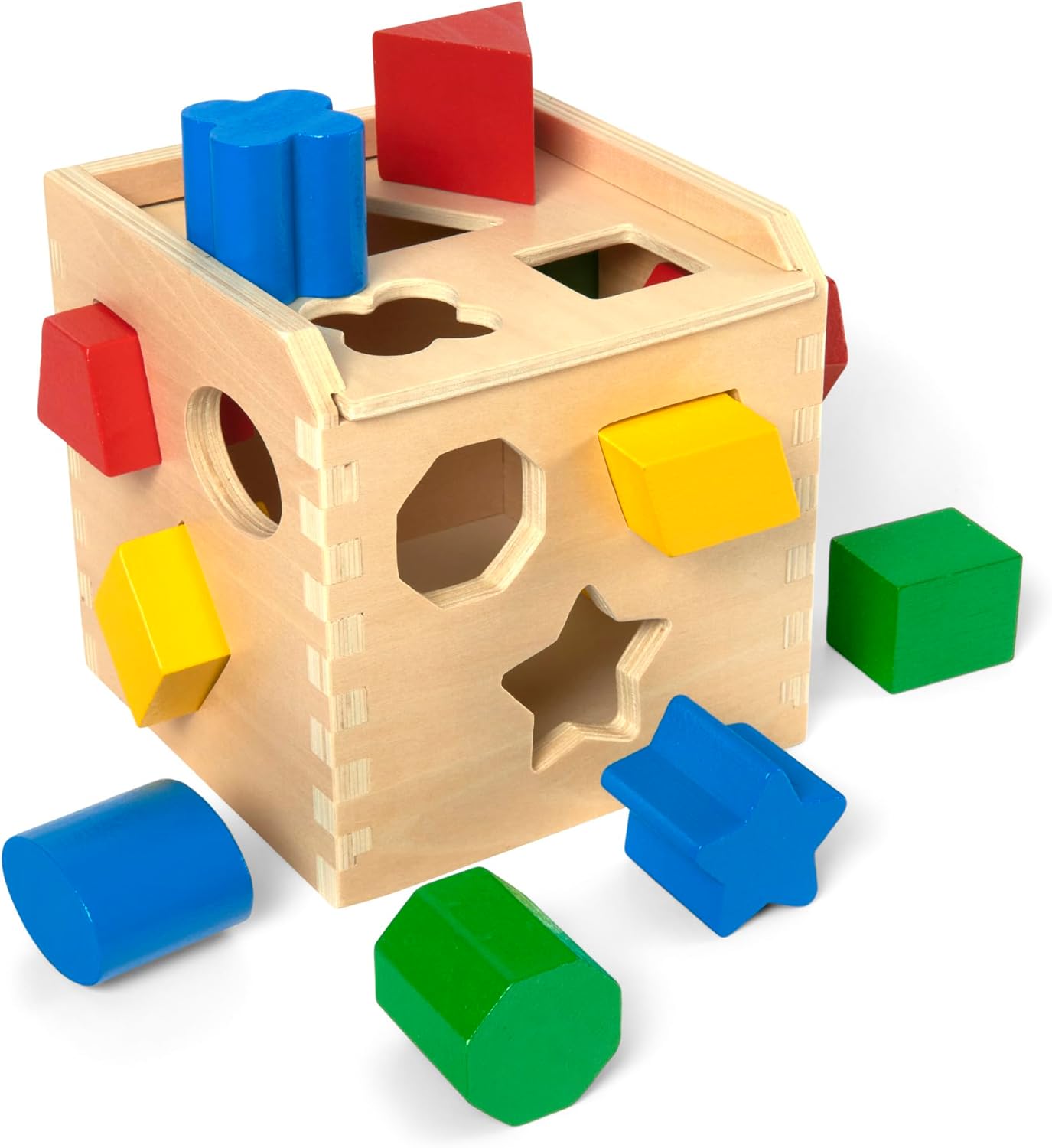 ★ Melissa & Doug Shape Sorting Cube ★ Melissa & Doug Shape Sorting Cube | Classic Pick | 2-4 | $14.98verified Oct 24, 2026, 1:08 PM UTC | This earns its reputation as a classic, a very high rating across tens of thousands of ratings for a toy this old and simple says the core idea works. But it isn't a flawless heirloom-quality product, it has one specific, well-documented mechanical flaw, a lid that won't stay shut, and a real, non-trivial minority of buyers get a unit with splintery or thin wood. It's less buy-blind and more buy-knowing-exactly-what-you're-getting. | See price (opens Amazon in a new tab) |
 ★ Melissa & Doug Primary Lacing Beads ★ Melissa & Doug Primary Lacing Beads | - | 3+ | $13.99verified Oct 24, 2026, 1:08 PM UTC | This is about as close to a safe bet as a fine-motor toy gets: a very high rating held over tens of thousands of ratings is rare air, and the reviews back it up with specifics, thick, chip-resistant paint, oversized beads that ease choking worries, and genuine developmental payoff. The only real friction points are minor manufacturing quirks that show up in a small minority of reviews. | See price (opens Amazon in a new tab) |
 Melissa & Doug Stack and Sort Board Melissa & Doug Stack and Sort Board | - | 2+ | $12.72verified Oct 24, 2026, 1:08 PM UTC | With a very high rating across thousands of ratings, this earns its reputation as one of the most dependable first-manipulative toys: 15 chunky, solid-wood pieces that toddlers can match by color and shape while building real fine motor and counting skills. It's not flawless, occasional paint smell out of the box and normal wear over time, but the core wood-and-peg design holds up for years. | See price (opens Amazon in a new tab) |
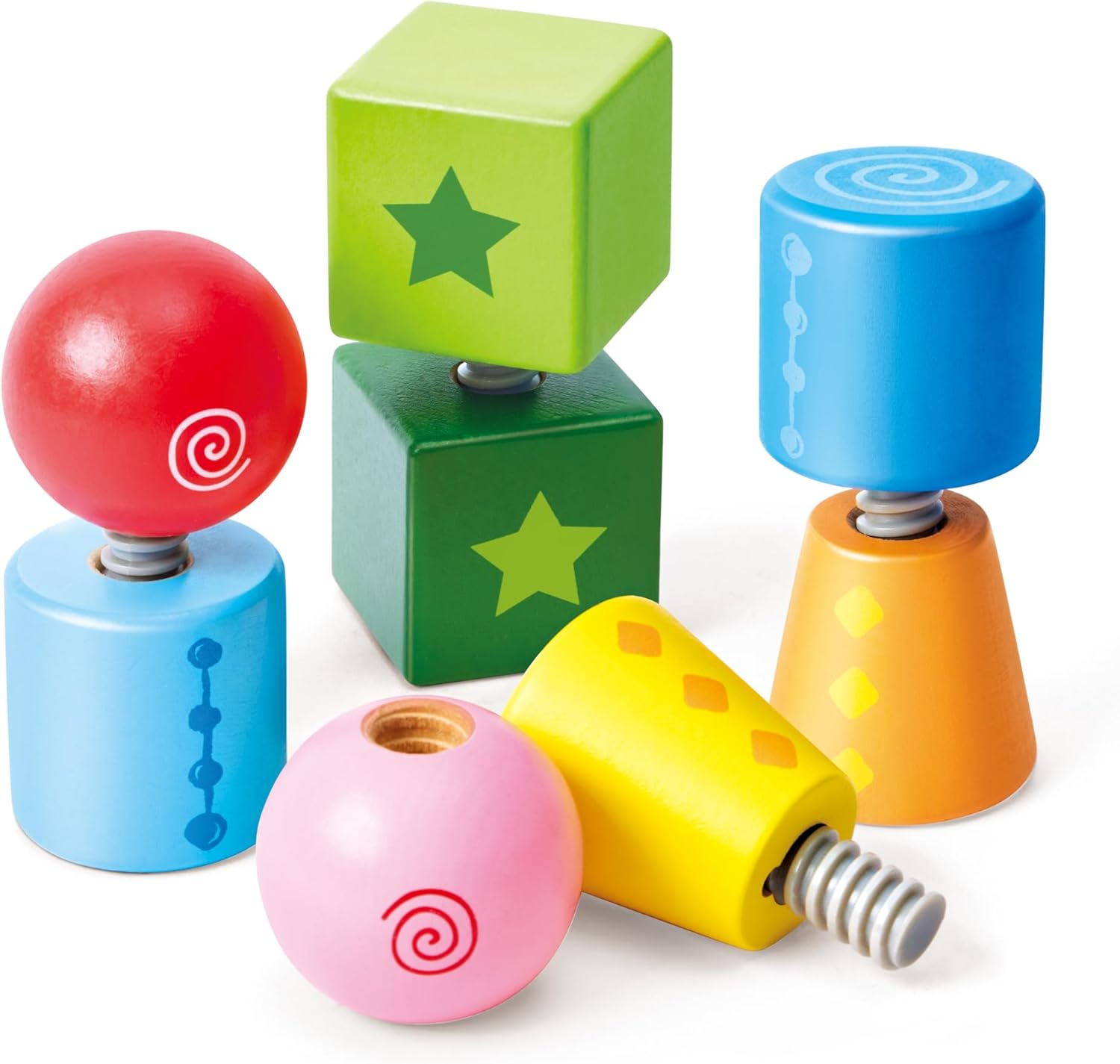 Hape Twist and Turnables Wooden Building Block Learning Set Hape Twist and Turnables Wooden Building Block Learning Set | - | 2-4 | $14.99verified Oct 24, 2026, 1:08 PM UTC | This earns a strong rating, and the praise is consistent: solid wood build, bright colors, and a mechanism that teaches something stacking blocks don't. Where it splits opinion is the twisting itself, the pieces aren't uniformly easy to turn, some connect smoothly, others take real hand strength a toddler on the younger end of the range may not have yet. As a fine-motor bridge between basic stacking blocks and true small-piece construction, it's a legitimate step up, just not a toy that will hold one child's attention for months on its own. | See price (opens Amazon in a new tab) |
 Melissa & Doug Match and Roll Shape Sorter Melissa & Doug Match and Roll Shape Sorter | - | 12+ months | $18.89verified Oct 24, 2026, 1:08 PM UTC | This is a well-loved classic that earns its reputation mainly through the drum-rolling mechanism, which genuinely adds a second layer of play beyond a standard sorter. It's not flawless, durability complaints show up often enough in review data to be a real, not rare, risk, and a meaningful slice of buyers find some pieces too small for comfort with the youngest end of the age range. For most families it delivers exactly what the brand promises, but quality control isn't perfectly consistent unit to unit. | See price (opens Amazon in a new tab) |
 Learning Resources Helping Hands Fine Motor Tool Set Learning Resources Helping Hands Fine Motor Tool Set | Editor's Pick | 3+ | $12.97verified Oct 24, 2026, 1:08 PM UTC | This is a legitimately useful, inexpensive fine-motor tool set with a track record backed by nearly 20,000 ratings and real, specific use cases from parents rather than generic five-star noise. The catch is durability, this isn't a buy-once, hand-down-for-years toy. The scooper tool in particular has a documented tendency to pop apart or break, especially under enthusiastic toddler use. Buy it for what it is, an affordable, well-designed practice set, not for heirloom durability. | See price (opens Amazon in a new tab) |
 Melissa & Doug Geometric Stacker Melissa & Doug Geometric Stacker | - | 2-4 | $13.49verified Oct 24, 2026, 1:08 PM UTC | This is a chunky, well-made wooden stacker that teaches real stacking, sorting, and size-sequencing skill rather than being a one-trick ring toy, and multiple parents specifically credit it with helping a toddler graduate past an easier stacker. The only recurring complaint is cosmetic, paint rubbing off inside the holes with heavy use, plus the standard caveat that it's not water-safe. Nothing in reviews suggests real durability or safety problems for the intended 2+ age range. | See price (opens Amazon in a new tab) |
 MONT PLEASANT Montessori Sensory Bin Tools (11-Piece) MONT PLEASANT Montessori Sensory Bin Tools (11-Piece) | - | 3+ | $23.99verified Oct 24, 2026, 1:08 PM UTC | For an 11-piece wooden tool set from a smaller brand, this one earns its keep: a very high rating and Amazon's Choice badge over multiple years of reviews is a real trust signal, not a thin new listing. The catch is what you don't get, despite some listing photos, there's no bin or tray included, just the tools and a storage bag, so budget for your own container and fill material. A handful of verified reviewers report the tongs as the weakest link mechanically. | See price (opens Amazon in a new tab) |
 Melissa & Doug Safari Wooden Chunky Puzzle Melissa & Doug Safari Wooden Chunky Puzzle | - | 2+ | $9.09verified Oct 24, 2026, 1:08 PM UTC | This is one of Melissa & Doug's most consistently well-reviewed toddler puzzles, and the very high rating across thousands of ratings backs that up. The extra-thick animal pieces are genuinely sized for 2-year-old hands, and the fact that pieces stand up on their own means the toy keeps earning its shelf space well after a child has solved it a hundred times. The only real ding is a small, inconsistent quality-control issue some buyers report, not common, but real. | See price (opens Amazon in a new tab) |
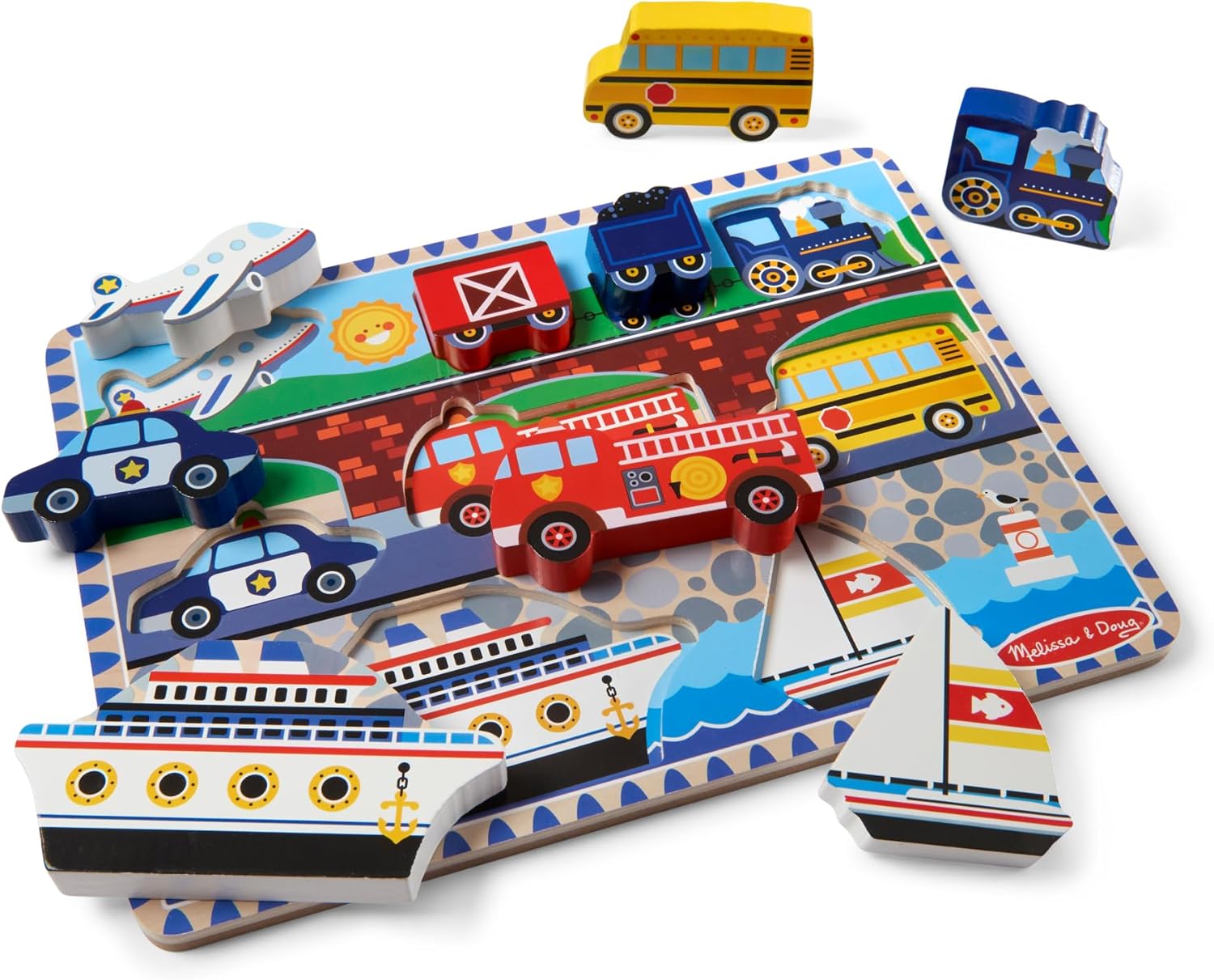 Melissa & Doug Vehicles Wooden Chunky Puzzle Melissa & Doug Vehicles Wooden Chunky Puzzle | - | 2+ | $9.56verified Oct 24, 2026, 1:08 PM UTC | This is a straightforward, well-made entry in Melissa & Doug's chunky-puzzle line, and its very high rating backs that up. It's not the gentlest possible starting point, that's the knob-puzzle format, but for a child already at or past 2, the chunky grip is exactly the right amount of challenge, and the pieces double as pretend-play vehicles well after the puzzle itself is mastered. | See price (opens Amazon in a new tab) |
 Hape Wooden Creative Peg Puzzle Hape Wooden Creative Peg Puzzle | - | 18+ months | $24.99verified Oct 24, 2026, 1:08 PM UTC | This earns its rating honestly: at its core it's a smartly designed shape-and-color puzzle that goes a level deeper than a standard chunky peg puzzle. The wood base and paint finish hold up to Hape's reputation, and the flexible plastic pegs are a genuine safety feature rather than a corner cut, though several parents feel misled that the pegs aren't solid wood like the photos suggest. Listed for 18 months and up, but the sweet spot in practice is closer to 2 to 2.5 years. | See price (opens Amazon in a new tab) |
 Hape Frog Pull-Along Hape Frog Pull-Along | - | 12+ months | $11.99verified Oct 24, 2026, 1:08 PM UTC | This earns its rating honestly: a sturdy, well-made wooden pull toy that toddlers genuinely respond to, with an open-close, croaking mouth that gives early walkers a reason to keep moving. Where it falls short is the cord, several independent buyers flagged it as too short and, in one case, poorly made enough to snap. If buying for a child already walking confidently, that short string may be more annoyance than dealbreaker. | See price (opens Amazon in a new tab) |
 Hape Walk-A-Long Snail Pull Toy Hape Walk-A-Long Snail Pull Toy | - | 12+ months | $28.84verified Oct 24, 2026, 1:08 PM UTC | This earns its very high rating honestly: a wooden pull toy that keeps working across ages instead of getting shelved after a month, because the shape sorter, the wagging tail, and the rattling shell give a 12-month-old and a 4-year-old genuinely different things to do with the same toy. The one real design compromise is the removable shell, it's there for finger-safety, but it's also the single part reviewers consistently call fiddly. Treat that as a known quirk, not a defect. | See price (opens Amazon in a new tab) |
| Adena Montessori Object Permanence Box with Tray | Montessori Staple | 6-12 months | $14.79verified Oct 24, 2026, 1:08 PM UTC | This is a real, well-made Montessori object permanence box that does what it says, no exaggerated claims needed. Parents are happy with build quality and value, babies mostly love the hand-eye coordination moment, and the two honest gripes that surface repeatedly, smaller than expected, and a foam ball that won't survive a determined teether, are worth setting expectations on rather than dealbreakers. | See price (opens Amazon in a new tab) |
 Kizfarm 8-in-1 Wooden Montessori Play Kit Kizfarm 8-in-1 Wooden Montessori Play Kit | - | 12+ months | $26.99verified Oct 24, 2026, 1:08 PM UTC | This kit earns its rating honestly: a genuinely well-loved, actively selling multi-activity Montessori toy that keeps toddlers occupied longer than most single-purpose wooden toys. It's not a Melissa & Doug or Hape-level heirloom piece, a credible slice of reviewers flag thinner wood and paint shedding, so set expectations as great value at a budget tier of construction rather than something that survives three kids. | See price (opens Amazon in a new tab) |
| Exorany Montessori Busy Board | Travel-Friendly Pick | 1-3 years, supervised | $24.98verified Oct 24, 2026, 1:08 PM UTC | This is a legitimately well-performing listing, a very high rating across thousands of reviews and Amazon's Choice status aren't nothing for a smaller brand, and verified reviews consistently praise it as a travel lifesaver that holds a toddler's attention. The real tension worth being upfront about: it's used and loved by parents of 1-year-olds, but the listing's own safety label draws the line at 3 and up for choking hazard, treat it as supervised play for the younger end of that range. | See price (opens Amazon in a new tab) |
In this guide
What Makes a Toy Actually Montessori?
A toy is Montessori-aligned when it's open-ended, built from real materials, isolates a single skill, and puts the child in control of how and when they use it. It's a set of design principles, not a brand name, so plenty of toys that never mention Montessori on the box fit the philosophy better than ones that do.
- Open-ended: there's no single correct outcome, so a child can use it differently as their skills grow
- Real materials: wood, metal, and natural fibers instead of light-up plastic or screens
- One skill at a time: a shape sorter teaches shape matching, not shape matching plus counting plus music, all at once
- Child-led: the toy waits for the child to act; it doesn't flash, buzz, or play a song to grab attention on its own
- No batteries, no screens: the feedback comes from the material itself (a ball dropping, a shape clicking into place), not electronics
Montessori-aligned versus Montessori-branded
Plenty of toys on Amazon put the word "Montessori" in the title without actually following the principles above. That doesn't automatically make them bad, some are genuinely well made, but it means the label alone isn't a shortcut. Judge each toy on materials, open-endedness, and whether it isolates a skill, not on the word printed on the box.
Best Montessori Toys for Ages 0-2
The first two years are about cause and effect, object permanence, and basic sorting. These are the materials real Montessori infant and toddler classrooms actually use, from classic wooden shape sorters to the object permanence box every Montessori-trained parent eventually buys.
Wooden Sorters, Stackers, and Puzzles
Melissa & Doug Shape Sorting Cube (Ages 2-4) (opens Amazon in a new tab)
The classic wooden shape sorter, and still one of the best. Twelve chunky shapes in a solid wood cube, simple enough for a one-year-old to grasp, satisfying enough that toddlers keep coming back long after they've mastered it.
- Established brand: Melissa & Doug
- Lid lifts off for easy dumping and restarting
Melissa & Doug Stack and Sort Board (Ages 2+) (opens Amazon in a new tab)
Fifteen solid wood pieces that stack, sort by color, or get sorted into a wooden base. An open-ended practical-life toy that holds up to being handed down between siblings.
- Established brand: Melissa & Doug
- No batteries, no plastic that cracks
Melissa & Doug Match and Roll Shape Sorter (Ages 12+ months) (opens Amazon in a new tab)
A shape sorter with a twist: matched shapes roll down a little ramp instead of just dropping into a bin, adding a cause-and-effect payoff that keeps toddlers engaged longer.
- Established brand: Melissa & Doug
- Adds motion and sound to standard shape sorting
Melissa & Doug Geometric Stacker (Ages 2-4) (opens Amazon in a new tab)
A stacking post with 25 wooden shapes and rings in different sizes and colors. An easy, low-cost way to work on size discrimination before a toddler is ready for more complex materials.
- Established brand: Melissa & Doug
- Good for size sequencing and stacking order
Melissa & Doug Safari Wooden Chunky Puzzle (Ages 2+) (opens Amazon in a new tab)
Eight chunky wooden safari-animal pieces, each with its own knob-free cut-out, sized for hands still working on a full pincer grip. A reliable first puzzle.
- Established brand: Melissa & Doug
- Good bridge before smaller jigsaw-style puzzles
Melissa & Doug Vehicles Wooden Chunky Puzzle (Ages 2+) (opens Amazon in a new tab)
Nine chunky vehicle pieces in the same sturdy wood format as Melissa & Doug's other early puzzles. A solid pick for a toddler more into trucks than animals.
- Established brand: Melissa & Doug
- Good second puzzle once the concept clicks
Hape Wooden Creative Peg Puzzle (Ages 18+ months) (opens Amazon in a new tab)
A shape-sorter and stacking peg puzzle in one, built from Hape's usual solid, splinter-free wood. Shapes stack onto pegs in more than one order, so there's more than one way to finish it.
- Established brand: Hape
- Combines shape sorting with peg stacking
Pull Toys and Cause-and-Effect
Hape Frog Pull-Along (Ages 12+ months) (opens Amazon in a new tab)
A simple wooden pull toy shaped like a frog eating a fly: bright colors, a satisfying wheel action, and enough sturdiness to survive being dragged across every floor in the house.
- Established brand: Hape
- Good for early walking practice
Hape Walk-A-Long Snail Pull Toy (Ages 12+ months) (opens Amazon in a new tab)
An award-winning wooden push-and-pull toy with a removable color-sorting shell. Works as a walking aid for a new walker and as a color-matching activity once a toddler sits down with it.
- Established brand: Hape
- Doubles as a push toy and a color-sorting activity
Practical Life and Object Permanence
Adena Montessori Object Permanence Box with Tray (Ages 6-12 months) (opens Amazon in a new tab)
A true Montessori classroom staple: a baby drops a ball through a hole, watches it disappear, then sees it reappear on the tray below. One of the simplest ways to introduce object permanence, and genuinely popular with over 3,000 reviews.
- Specialty brand: Adena Montessori
- 3,146 reviews on Amazon
Kizfarm 8-in-1 Wooden Montessori Play Kit (Ages 12+ months) (opens Amazon in a new tab)
Eight practical-life activities in one wooden box: an object permanence box, a coin slot, a carrot harvest game, shape sorting, and stacking. Useful for parents who want to rotate activities without buying eight separate toys.
- Specialty brand: Kizfarm
- 1,365 reviews on Amazon
Exorany Montessori Busy Board (Ages 1-3 years, supervised) (opens Amazon in a new tab)
A travel-friendly busy board packed with zippers, buckles, and latches: the same fine-motor practical-life skills as a Montessori classroom's dressing frames, in a board that folds flat for the car or a restaurant table.
- Specialty brand: Exorany
- Over 4,000 reviews on Amazon
Small brand, real reviews
Adena Montessori, Kizfarm, and Exorany aren't household names the way Melissa & Doug or Hape are. What they have going for them is volume of real reviews (3,000 to over 4,000 each) on the exact products above, which is a reasonable substitute for brand history when you're deciding whether to trust a newer maker.
Best Montessori Toys for Ages 3-5
Preschoolers are ready for finer motor work: lacing, twisting, scooping, and tool use. This is the age where practical-life activities start to look like the real dressing frames, pouring exercises, and transfer work in a Montessori classroom, just adapted for home.
Melissa & Doug Primary Lacing Beads (Ages 3+) (opens Amazon in a new tab)
Thirty wooden beads in basic shapes and two laces: simple on paper, but genuinely effective at building the pincer grip and hand-eye coordination that Montessori practical-life work is built around.
- Established brand: Melissa & Doug
- Two laces included for parallel play
Hape Twist and Turnables Wooden Building Block Learning Set (Ages 2-4) (opens Amazon in a new tab)
Wooden blocks that twist together instead of just stacking, adding a fine-motor twisting motion to standard block play. A good pick for a preschooler who has outgrown basic stacking blocks.
- Established brand: Hape
- Open-ended, no single correct configuration
Learning Resources Helping Hands Fine Motor Tool Set (Ages 3+) (opens Amazon in a new tab)
Tweezers, tongs, and scoops from a genuinely recognized educational brand, built for transfer work with a sensory bin or a bowl of dry beans. With nearly 20,000 reviews, it's the safest bet in this category if you'd rather stick with a name you already trust.
- Established brand: Learning Resources
- 19,346 reviews on Amazon
MONT PLEASANT Montessori Sensory Bin Tools (11-Piece) (Ages 3+) (opens Amazon in a new tab)
Eleven wooden scoops and tongs sized for transfer work: the pouring-and-scooping practical-life activity that's a staple in Montessori and Waldorf classrooms alike. A cheap way to turn any sensory bin into a fine-motor station.
- Specialty brand: MONT PLEASANT
- 305 reviews on Amazon
- Pair lacing beads or the fine motor tool set with a small tray so the activity has a clear start and end point, just like a Montessori work shelf
- Rotate two or three practical-life toys at a time instead of leaving all of them out, so each one stays novel
- Let the child choose which activity to do rather than assigning one, that's the child-led part of the philosophy
Best Lovevery Toys on Amazon
Lovevery is best known for its age-staged subscription boxes, but its individual toys can also be bought one at a time on Amazon, without a subscription commitment. That matters for a parent who wants one specific item, a gift-giver who doesn't want to set up someone else's subscription, or anyone comparing Lovevery's actual build quality against the picks above before committing to the recurring box. The 5 picks below span Lovevery's most recognizable single item (the Play Gym) through a storage solution built around the Montessori toy-rotation practice, all Lovevery-brand products. As with any Amazon listing, check the seller before you buy.
What to know before buying Lovevery a la carte
- Individual products cost more per item than the subscription's effective per-box price, since the subscription bundles multiple pieces at once.
- Buying direct on Amazon means no subscription to cancel later, a real advantage for a one-time gift.
- Confirm the listing is sold by Lovevery or fulfilled through their official storefront, not a third-party reseller at a markup.
- Match the product to age range carefully. Lovevery designs each item around a specific developmental stage, not a broad age range.
Best Overall Lovevery Product
Lovevery's flagship, an award-winning stage-based activity gym and play mat built for the first year, with a fort conversion for toddler use afterward. It's the single most recognizable Lovevery product and the most likely one to already be on a new-parent registry.

Lovevery The Play Gym (Ages 0-2) (opens Amazon in a new tab)
Lovevery's flagship award-winning play gym and mat, built for the first year.
Best Lovevery for Building Play
70 solid wood blocks and shapes with a wooden storage box and over 20 built-in activities, built around open-ended Montessori-style play rather than a generic block bin.

Lovevery The Block Set (Ages 1-4) (opens Amazon in a new tab)
70-piece solid wood block set with wooden storage box, 20+ built-in activities.
Best Lovevery for Music Exploration
6 real instruments plus a rhythm book, for ages 18 months to 4 years, aimed at simple, guided music exploration instead of a noisy electronic toy.

Lovevery The Music Set (Ages 1-4) (opens Amazon in a new tab)
6 real Montessori-style instruments plus a rhythm book, ages 18 months to 4 years.
Best Single Lovevery Play Kit
The same age-staged kit format Lovevery's subscription ships, sold standalone: 8 play pieces, a board book, and a play guide for the toddler "babbler" stage. The pick for trying the actual subscription format without subscribing.

Lovevery The Babbler Play Kit (Ages 1-2) (opens Amazon in a new tab)
A standalone age-staged play kit, the same format Lovevery's subscription ships, no subscription needed.
Best Lovevery for Toy Rotation
A 2-in-1 Baltic birch storage shelf built for toy rotation, the Montessori-style practice of displaying a limited set of toys instead of a full toy box. Not a toy itself, the pick for a family already committed to Montessori-style organization.

Lovevery The Play Shelf (Ages 0-5) (opens Amazon in a new tab)
2-in-1 Baltic birch storage shelf built for Montessori-style toy rotation.
| Product | Best Age | Best For | Type |
|---|---|---|---|
| The Play Gym | 0-12mo | Overall pick | Activity gym |
| The Block Set | 1-4 | Building play | Block set |
| The Music Set | 18mo-4yr | Music exploration | Instrument set |
| The Babbler Play Kit | 13-15mo | Trying the subscription format | Single play kit |
| The Play Shelf | 0-5 | Toy rotation | Storage furniture |
How to Choose Between Similar Options
Start with the skill, not the toy. Decide whether your child needs practice with gross sorting (shape sorters, stackers), fine motor grip (lacing, tweezers, scoops), or cause and effect (object permanence, pull toys), then pick from that group instead of comparing unrelated toys against each other.
| Skill focus | Age band | Good starting pick |
|---|---|---|
| Shape sorting and stacking | 0-2 | Melissa & Doug Shape Sorting Cube |
| Object permanence and cause-effect | 0-2 | Adena Montessori Object Permanence Box |
| Fine motor and practical life on the go | 0-2 | Exorany Montessori Busy Board |
| Lacing and pincer grip | 3-5 | Melissa & Doug Primary Lacing Beads |
| Transfer work and tool use | 3-5 | Learning Resources Helping Hands Fine Motor Tool Set |
Final Verdict
You don't need a shelf full of Montessori-branded toys to get the benefits of the approach. A wooden shape sorter, an object permanence box, and a lacing set cover most of what a child needs between birth and age five, and all three show up on this list from brands with real track records or a strong pile of honest reviews.
If you're starting from zero, begin with one toy per age band above and add more only once your child has spent real time with what they already have. Montessori materials work best in small, rotating sets, not as a pile of options competing for attention.
Best overall starting point: the Adena Montessori Object Permanence Box for babies and toddlers, paired with Melissa & Doug Primary Lacing Beads once they hit preschool age.
Frequently asked questions
What age should Montessori toys start?
Montessori-aligned toys work from birth, starting with simple cause-and-effect materials like an object permanence box. As a child grows past infancy, sorting, stacking, and puzzle-based materials take over, followed by finer motor work like lacing and scooping around age three.
Do Montessori toys have to be wooden?
No, but wood is common because it's durable, gives honest sensory feedback, and doesn't rely on batteries or screens. A toy can follow Montessori principles in other materials too, as long as it stays open-ended and lets the child control the pace of play.
What's the difference between Montessori toys and regular educational toys?
Regular educational toys often combine several skills at once and use lights, sounds, or screens to hold attention. Montessori toys isolate one skill at a time and rely on the material itself, not electronics, to give feedback, which keeps the child leading the activity instead of reacting to the toy.
How many Montessori toys does a toddler actually need?
Far fewer than most parents assume. A rotating set of three to five materials, swapped every couple of weeks, works better than a large collection left out all at once. Fewer choices at a time tends to produce longer, more focused play.
Are cheaper Montessori-style toys from smaller brands worth buying?
Often yes. Several well-reviewed practical-life toys in this guide come from newer, smaller brands rather than established names like Melissa & Doug or Hape. Judge them by review volume and whether they follow real Montessori principles (open-ended, real materials, one skill at a time), not by brand recognition alone.
Can you buy Lovevery products without the subscription?
Yes. Individual Lovevery items can be bought on Amazon without a subscription, including the Play Gym, Block Set, Music Set, and more.
Is buying Lovevery on Amazon cheaper than the subscription?
Not always. The subscription bundles multiple pieces into each box, which suits ongoing variety. Buying a single product a la carte makes more sense for a specific gift or a one-time purchase, not for ongoing variety.
How do I know I'm buying genuine Lovevery and not a reseller markup?
Check that the listing is sold by or fulfilled through Lovevery's official Amazon storefront rather than a generic third-party seller, which is the more common risk with in-demand brands sold on a marketplace.