

Best for Preschoolers
Candy Land Kingdom of Sweet Adventures Board Game
$13.86 · verified Oct 23, 2026, 2:05 PM UTC

Best Family Board Games for Game Night
A shelf of board games only earns its space if the games actually get replayed. Here are 5 real picks worth keeping in the family game closet, plus more by player count, mechanic, and age further down.
By the USA Toy Deals Team · Updated October 2026 · 15 min read · How we choose
Who it's forFor a family looking for a go-to board game, from a preschooler's first spinner game through a strategy game the whole table can grow into.
Some links on this page are affiliate links. If you buy through one, we may earn a commission at no extra cost to you. We only recommend what we'd actually buy for our own kids. Full disclosure.
The best family board games share a few traits: rules a new player can learn in a couple of minutes, enough randomness that a young player has a real shot at winning, and enough depth that the box doesn't disappear to the back of a closet after one play.
The 5 picks below span genuine childhood classics through a real strategy game, all products with a long track record on Amazon, not just a pretty box.
Keep scrolling for more board games by angle: picks built for exactly 2 players, cooperative games where the whole table wins or loses together, more nostalgic classics, and picks sized for an 8-year-old specifically.
Compare our picks
Swipe the table sideways to see every column.
| Toy | Best for | Ages | Price | Bottom line | |
|---|---|---|---|---|---|
| ★ Candy Land Kingdom of Sweet Adventures Board Game | Best for Preschoolers | 3+ | $13.86verified Oct 23, 2026, 2:05 PM UTC | This modern redesign of the classic, a shorter, faster-playing board built specifically for the 3-to-6 age window, is landing exactly as intended: a very high rating with an unusually strong no-reading-required reputation among parents of mixed-age siblings. It won't hold an older kid's attention on its own merits, there's no decision-making, just draw and move, but as a first board game for a preschooler it's about as close to a sure thing as this category gets. | See price (opens Amazon in a new tab) |
| Sorry! | Best Overall Classic | 6-8 | $6.99verified Oct 23, 2026, 2:05 PM UTC | For most families, Sorry! earns its spot as a genuine repeat-play pick rather than a nostalgia purchase: real buyers across a wide age range report actually replaying it, not just owning it. The one real gap is storage, budget for a separate small bag or box if you want the pieces to stay together between game nights. If the youngest regular player is under 6, Hasbro's own Junior-rules editions (see our family board games guide, which breaks down picks by age too) are worth checking before this standard version. | See price (opens Amazon in a new tab) |
 Operation Operation | Best for Hands-On Play | 6-8 | $19.99verified Oct 23, 2026, 2:05 PM UTC | Operation earns its spot as a genuine repeat-play pick rather than a nostalgia purchase: the tweezers-and-buzzer mechanic still works on kids who've never seen it before, and it doubles as an easy way to build steady-hand coordination without it feeling like practice. The buzzer isn't quite as loud as old-timers remember, and a couple of the ailment pieces take real patience to lift out, but neither is a dealbreaker. If you want one physical, no-screen game to add next to the usual card and dice options, this is a safe, well-tested choice, and it's featured for exactly that reason in our best family board games guide. | See price (opens Amazon in a new tab) |
 Hasbro Gaming The Game of Life Board Game, Family Games for Kids Ages 8+, Includes 31 Careers, Family Board Games for 2-4 Players, (Amazon Exclusive) Hasbro Gaming The Game of Life Board Game, Family Games for Kids Ages 8+, Includes 31 Careers, Family Board Games for 2-4 Players, (Amazon Exclusive) | Best for a Longer Session | 8+ | $24.17verified Oct 23, 2026, 2:05 PM UTC | The Game of Life earns its spot as a family game night staple because it asks so little of new players and still delivers a genuinely fun, unpredictable half hour of spinning, choosing, and reacting together. It won't satisfy parents hoping for the exact rules and board they remember from decades ago, and it's not built for a full house of players, but for a family of 2 to 4 with kids 8 and up, it's about as reliable a pick as classic board games get. | See price (opens Amazon in a new tab) |
 Yahtzee Yahtzee | Best for Big Groups | 8-10 | $ | Yahtzee earns its long shelf life honestly: real buyers across a wide age range report actually replaying it, not just owning it, and the blend of luck and light strategy holds up whether it's two people killing twenty minutes or a full family table. The one real gap is the scorepad supply, budget for a separate pad of score sheets if your family plays often. For a broader shortlist of what else pairs well with it, see our best family board games guide. | See price (opens Amazon in a new tab) |
In this guide
What Makes a Family Board Game Worth Keeping
Fast rules and real replay value matter more than a big box or a licensed theme.
What to check before buying a family board game
- Teachable in a few minutes: if the rulebook runs several pages, it's a harder sell for a spontaneous game night.
- A real chance for a young player to win, luck-based mechanics (a spinner, a dice roll) keep it fair across a wide age range.
- Player count: know whether a game is built for exactly 2 or scales up to a full family table.
- Piece durability: small pawns, cards, and dice get handled constantly, look for storage that keeps pieces from scattering.
5 Real Family Board Games
Best for Preschoolers
If the youngest player at the table can't read yet, this is the game that still lets them win fair and square: spin the dial, move to the matching color, no strategy or vocabulary required.
Candy Land Kingdom of Sweet Adventures Board Game (Ages 3+) (opens Amazon in a new tab)
Color-matching spinner game, no reading needed, gives a young player a fair shot at winning.
Best Overall Classic
The slide-and-sorry chase game that's been a staple for decades: 4 pawns, a deck of movement cards, and the specific thrill of sending someone's pawn back to Start. Works for a wide age range at the same table.
Sorry! (Ages 6-8) (opens Amazon in a new tab)
The classic slide-and-sorry chase game, a wide-age-range family staple for decades.
Best for Hands-On Play
A steady-hand tweezers game where the buzzer is the real opponent. Plays solo as a skill challenge or with a group, and the physical mechanic reads as a fresh change from a shelf of card-and-dice games.
Operation (Ages 6-8) (opens Amazon in a new tab)
Steady-hand tweezers game where the buzzer is the real opponent, plays solo or with a group.
Best for a Longer Family Session
Spin the wheel, pick a career, collect a family, and race for retirement. A longer, more involved game than a quick spinner or dice game, built for a family that wants a full game-night session rather than a 15-minute round.
Hasbro Gaming The Game of Life Board Game, Family Games for Kids Ages 8+, Includes 31 Careers, Family Board Games for 2-4 Players, (Amazon Exclusive) (Ages 8+) (opens Amazon in a new tab)
A longer, career-and-family life-simulation board game built for a full game-night session.
Best for Big Groups
5 dice, 3 rolls, and a scorecard that rewards both luck and real strategy about which category to bank. Plays in under 30 minutes and scales from 2 players to a full table, no board needed.
Yahtzee (Ages 8-10) (opens Amazon in a new tab)
Dice game that scales from 2 players to a full table, plays in under 30 minutes.
Best 2-Player Board Games
A lot of games marketed as "family board games" technically support 2 players but were clearly designed for a bigger table, the pacing drags and the strategy thins out. The first 3 below were built for exactly 2 players from the start, so the game stays tight and fast whether it's a parent and one kid, 2 siblings, or 2 friends; the fourth plays 2 to 5 but holds up especially well at exactly 2.
Best Overall for 2 Players
Drop discs, get 4 in a row before the other player does. A pure 2-player strategy game with a rule set a 6-year-old learns in one round and a strategy depth that keeps working for years after that.

Connect 4 (Ages 6-8) (opens Amazon in a new tab)
Pure 2-player strategy game, simple rules with real strategy depth over time.
Best Classic Duel
Hidden ships, called-out coordinates, and the exact moment a 'hit' lands. Built for exactly 2 players with folding privacy screens, so it doesn't need a group to come off the shelf.

Battleship (Ages 6-8) (opens Amazon in a new tab)
Hidden-ship guessing duel with folding privacy screens, built for exactly 2 players.
Best Deduction Game
A yes-or-no deduction duel: flip down faces on your board by asking questions until only one is left. Short enough to replay immediately after losing, which makes it a strong pick for exactly 2.

Guess Who? (Ages 6-8) (opens Amazon in a new tab)
Yes-or-no deduction duel, short rounds built for exactly 2 players.
Best Strategy Step-Up for 2
Claim train routes across a map of North America and quietly complete secret destination tickets. A real strategy game that plays well with exactly 2, for a family ready to graduate past a luck-based game.

Ticket to Ride (Ages 8-10) (opens Amazon in a new tab)
Route-building strategy game that plays well with exactly 2, a step up from luck-based games.
Best Cooperative Board Games for Kids
In a cooperative board game, everyone plays on the same side against the game itself. No player elimination, and no meltdown over losing to a sibling. These 3 are the real standouts, from an easy preschool entry point through a real strategy challenge for an older cooperative-game crowd.
Best Cooperative Pick for Preschoolers
A cooperative counting game for kids years away from a strategy game: help Mother Hen bring her chicks back to the coop, with no reading required and everyone winning or losing together. The entry point to cooperative play.

Count Your Chickens (Ages 3+) (opens Amazon in a new tab)
Cooperative counting game, the entry point to cooperative play for preschoolers.
Best Cooperative Game Overall
Everyone works out which fox stole the pie together, using a slide-in clue detector instead of reading. No player elimination and no one loses to another player, only to the clock.
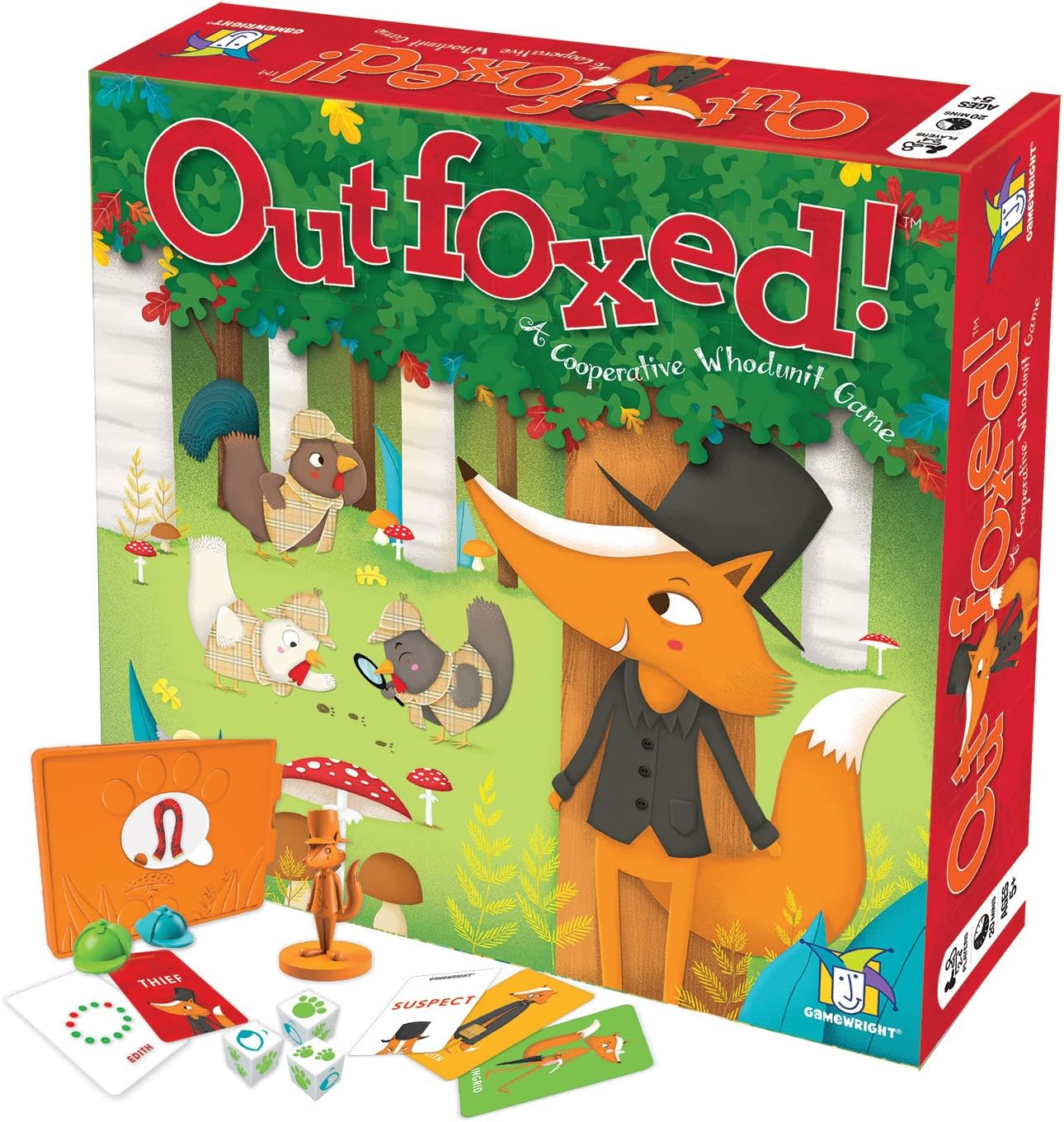
Outfoxed! (Ages 6-8) (opens Amazon in a new tab)
Everyone works out a mystery together using a clue detector, no reading required.
Best Cooperative Game for Older Kids
A desert survival game where the whole table works together to uncover a flying machine and escape, rated for ages 10 and up. A step up in complexity for an older cooperative-game crowd.

Forbidden Desert (Ages 10+) (opens Amazon in a new tab)
Desert survival game for ages 10 and up, for an older cooperative crowd.
More Classic Board Games Worth Owning
Candy Land and Sorry! above are 2 of the strongest classics, but a lot of "classic" toys get bought purely on nostalgia and then sit unplayed. These 4 are the rest of the exceptions: still genuinely well-designed for the age range they target, which is why they've stayed in print for decades.
Best for Younger Kids
The Pop-O-Matic dice dome is the entire pitch: no turn-taking arguments over a lost die, just a satisfying click and a number. A simpler, younger sibling to Sorry!

Trouble (Ages 6-8) (opens Amazon in a new tab)
A simpler, younger sibling to Sorry!, no lost dice thanks to the Pop-O-Matic dome.
Best First Board Game
Pure spinner luck, no reading and no strategy required. A ladder up feels like a win, a chute down is over in a second, not a meltdown.

Chutes and Ladders (Ages 3-5) (opens Amazon in a new tab)
Pure spinner luck with no reading required, a genuine first board game.
Best for Builders
Half the fun is building the Rube Goldberg trap before anyone even starts playing. A board game that's also a construction toy, for a kid more interested in the machine than the race to the cheese.

Mouse Trap (Ages 6-8) (opens Amazon in a new tab)
Half construction toy, half board game, building the trap is as fun as the race itself.
Best for Toddlers
A counting game dressed up as a cherry-picking game, spin the dial and add or drop cherries from your tree. The board game a lot of kids play years before they can read a rulebook.

Hi Ho! Cherry-O (Ages 3-5) (opens Amazon in a new tab)
Counting game dressed up as cherry-picking, playable years before a kid can read a rulebook.
What's Good for an 8-Year-Old
Around age 8, a lot of kids are ready to move past pure-luck games and start handling real strategy, planning several turns ahead, or reading-heavy word play. Yahtzee (above) is a gentle first step since it still involves dice but rewards real scoring strategy, and Ticket to Ride and Guess Who? (in the 2-player section above) are both a strong fit too. Scrabble picks up where those leave off. For a shorter game night, the best family card games set up faster and fit the same table.
Best for Building Vocabulary
The classic crossword tile game, still the reference point every other word game gets compared to. A real vocabulary workout that doesn't feel like a worksheet, and most kids have the reading fluency for it by age 8.
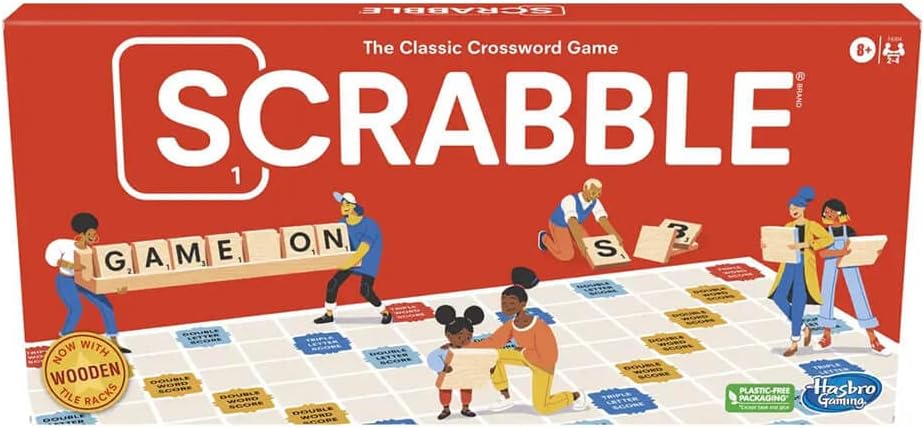
Scrabble (Ages 8-10) (opens Amazon in a new tab)
The classic crossword tile game, a real vocabulary workout for a strong reader.
Frequently Asked Questions
Frequently asked questions
What's a good first board game for a preschooler?
A pure luck-based spinner or dice game like Candy Land or Hi-Ho! Cherry-O, no reading and no real strategy required, so a 3-year-old has a fair shot at winning just like everyone else at the table.
How many players do family board games need?
Most of the games in this guide work from 2 players up through a full family table, though the 2-player section above covers a few built specifically for exactly 2.
What's the difference between a board game and a card game for family game night?
Board games generally take up more table space and run longer per round, while card games travel easier and set up faster. See our family card games guide for the card-game side of the comparison.
Are cooperative board games better than competitive ones for young kids?
Not universally better, but cooperative games remove the sting of losing to a sibling since the whole table wins or loses together, and since the whole table is on the same side, a stronger player can help a younger one without anyone technically losing to a sibling.
What age can kids start playing cooperative board games?
As young as 3 with a simple design like Count Your Chickens, which uses counting instead of reading or complex strategy.
Is Forbidden Desert too hard for kids?
The listing is for ages 10 and up. One reviewer says the rules felt overwhelming at first and took a few learning games, and also notes a character can die, which can upset younger kids. Another calls it easy to teach, so for kids near 10 it is a good step up from the simpler cooperative games.
Do Sorry! and Trouble play differently?
Trouble uses a built-in Pop-O-Matic dice dome and is generally simpler and better suited to younger kids, while Sorry! uses a deck of movement cards and has a bit more strategic depth.
Is Mouse Trap actually a functional board game or mostly a toy?
Both: building the elaborate trap is itself a construction activity, and once built, it's a genuine race-around-the-board game, which is part of why it's stayed popular for decades.
Is Scrabble too hard for an 8-year-old?
Most 8-year-olds have the reading fluency for it, especially with a junior or simplified scoring approach for the first few games while they build confidence.