

Best Overall
LEGO City Passenger Airplane
$119.99 · verified Oct 24, 2026, 1:08 PM UTC
Best Toys for Kids Ages 6-8: The 2026 Gift Guide
LEGO sets, Nerf guns, board games, and more: what actually gets played with, not just unwrapped.
By the USA Toy Deals Team · Updated October 2026 · 12 min read · How we choose
Some links on this page are affiliate links. If you buy through one, we may earn a commission at no extra cost to you. We only recommend products we can back up with the listing and what real buyers report. Full disclosure.
Quick answer: the best toys for kids ages 6 to 8 are LEGO City sets, short-turn board games, and no-battery Nerf blasters. Match difficulty to age. At 6, choose LEGO under 300 pieces and luck-based games. Bigger builds like the City Passenger Airplane (7+) and strategy games like King of Tokyo (8+) suit older kids.
Ages 6 through 8 are the golden years of toys. Kids are old enough to follow instructions, build real things, and actually play games with rules: but they're still young enough to get genuinely excited about opening a new box. This is the window where the right gift gets played with for months, not days.
The pattern is clear once you watch enough kids in this age range tear through gifts: the toys that last are the ones that combine building, collecting, or competing with something social. A LEGO set isn't just a LEGO set: it's an afternoon project with a parent and then weeks of imaginative play. A Nerf gun isn't just a blaster: it's a reason to run around outside with the neighbor kids. Here's what actually works.
Top pick
Best OverallLEGO City Passenger Airplane (opens Amazon in a new tab)
LEGO City Passenger Airplane: a bigger build with hours of assembly and weeks of play after.
$119.99· verified Oct 24, 2026, 1:08 PM UTCSee price (opens Amazon in a new tab)#2 pick
Best BudgetNerf N-Strike Elite Strongarm (opens Amazon in a new tab)
Nerf Strongarm: no batteries, no fuss, survives being left out in the rain.
$14.95· verified Oct 24, 2026, 1:08 PM UTCSee price (opens Amazon in a new tab)#3 pick
Best for 8 Year OldsTicket to Ride (opens Amazon in a new tab)
Ticket to Ride: the best step into real strategy games for an older kid in this range.
$39.99· verified Oct 24, 2026, 1:08 PM UTCSee price (opens Amazon in a new tab)#4 pick
Family PickKing of Tokyo (New Edition) (opens Amazon in a new tab)
King of Tokyo: giant monsters, quick turns, everyone wants a rematch.
$43.95· verified Oct 24, 2026, 1:08 PM UTCSee price (opens Amazon in a new tab)Compare our picks
Swipe the table sideways to see every column.
| Toy | Best for | Ages | Price | Bottom line | |
|---|---|---|---|---|---|
| ★ LEGO City Passenger Airplane | Best Overall | 7+ | $119.99verified Oct 24, 2026, 1:08 PM UTC | A big, satisfying LEGO City build for a kid who's into planes, most manage it solo or close to it, though the smaller engine details may need a hand. | See price (opens Amazon in a new tab) |
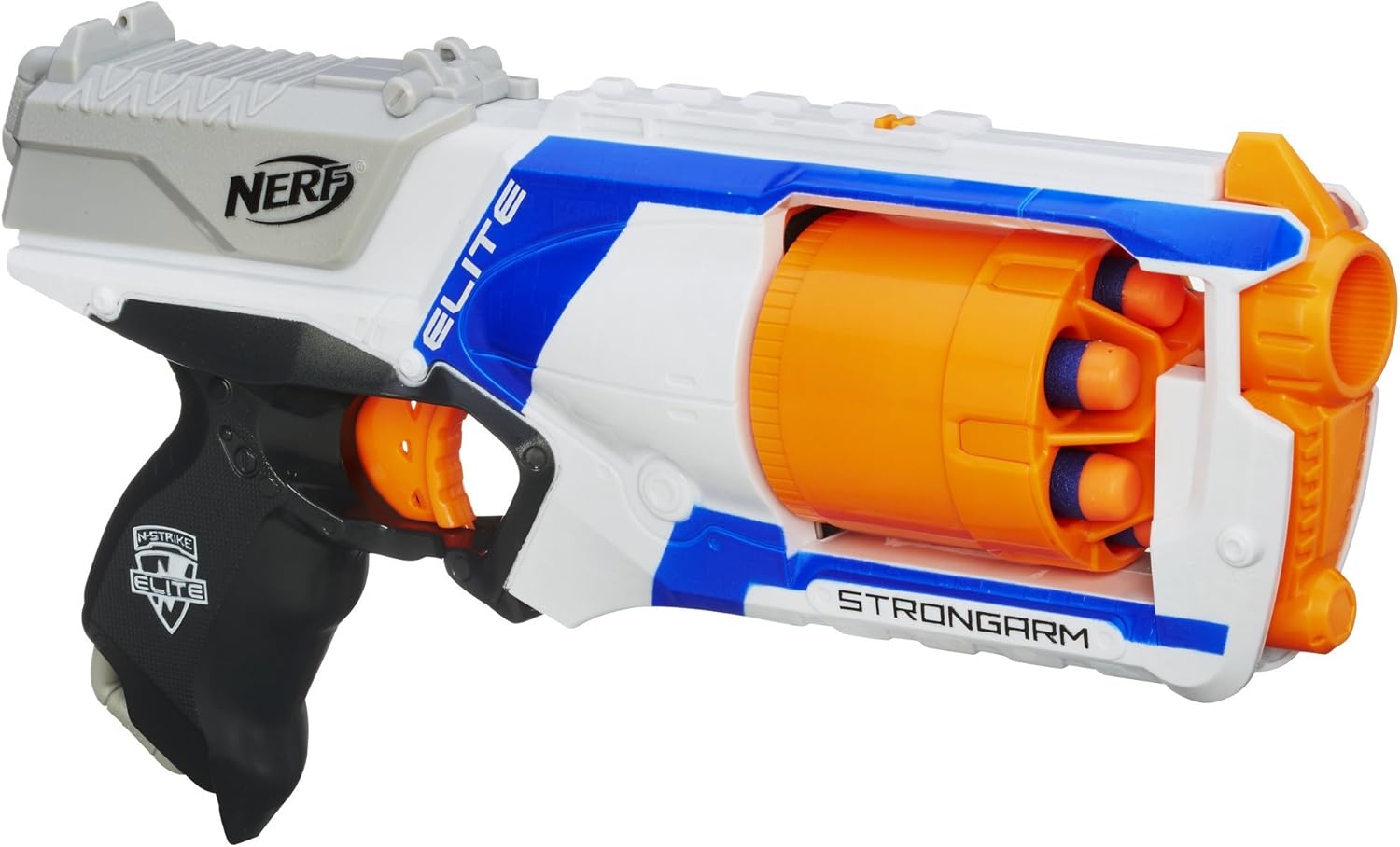 Nerf N-Strike Elite Strongarm Nerf N-Strike Elite Strongarm | Best Budget | 6+ | $14.95verified Oct 24, 2026, 1:08 PM UTC | A reliable, no-batteries pick for a first real Nerf blaster, just budget for extra darts and expect an occasional misfire. | See price (opens Amazon in a new tab) |
 Ticket to Ride Ticket to Ride | Best for 8 Year Olds | 8-10 | $39.99verified Oct 24, 2026, 1:08 PM UTC | Ticket to Ride is a genuine strategy game dressed up as an easy family one, and two decades after it won Game of the Year in Germany, it still earns that reputation with the families reviewing it today. The learning curve is real: expect a slower first game while everyone works out route-blocking, and an 8-year-old may need a session or two before the strategy clicks the way it does for older kids and adults. That trade-off is exactly why it shows up on our best board games for 8-year-olds guide, it rewards repeat play instead of wearing thin after a few rounds the way a roll-and-move classic can. | See price (opens Amazon in a new tab) |
 King of Tokyo (New Edition) King of Tokyo (New Edition) | Family Pick | 8+ | $43.95verified Oct 24, 2026, 1:08 PM UTC | A genuinely fun family dice-battler that holds up for adults too, best for a capable 8-year-old with an adult playing the first round or two, rather than handed off solo. | See price (opens Amazon in a new tab) |
In this guide
LEGO City and Friends
The best building sets for this age group have real instructions, a manageable piece count, and a finished model kids are proud to show off. Ages 6-8 are old enough to follow multi-step instructions, and the sense of accomplishment when they finish a build is genuinely exciting to watch. LEGO is the brand that nails this balance most consistently.
LEGO City sets are the bread and butter. They come with vehicles, buildings, and minifigures that make sense together: police stations, fire trucks, airports, construction sites. The builds are challenging enough to hold attention without being so complex that a 6-year-old rage-quits halfway through. Most City sets take 1-3 hours depending on size, which is a perfect sweet spot.
The LEGO City Passenger Airplane is one of the strongest City sets for this age group. The roof lifts off to reveal a full cockpit, cabin seating, and galley, plus a catering truck and nine minifigures to build out a whole airport scene. It's rated 7+ and runs over 900 pieces, so it suits a confident 7 or 8 year old better than a 6 year old. It's a bigger investment than most sets on this list, but it delivers hours of building and then weeks of play afterward. If you're buying for a birthday or holiday, this is the kind of set that makes their face light up.
LEGO City Passenger Airplane (Ages 7+) (opens Amazon in a new tab)
A plane with a removable roof revealing the cockpit and cabin, plus a catering truck and nine minifigures to populate a whole airport scene.
LEGO Friends sets lean more into narrative and character-driven play. The builds include houses, cafes, animal rescue centers, and adventure vehicles with named characters and storylines. Kids who enjoy creating scenes and telling stories gravitate toward these, and the detail in the newer Friends sets is genuinely impressive. The pieces are standard LEGO compatible, so they mix with City sets without issue. Once they have outgrown guided sets, an open-ended starter brick set works too: see our LEGO Classic Brick Box review.
Don't buy random loose LEGO pieces for this age group: themed sets with instructions have much more appeal. Kids at 6-8 want to build something specific and recognizable. The open-ended creativity with loose bricks comes later, once they've built enough sets to understand how pieces work together.
Before buying, check a set against these four things:
- Piece count: under 300 for a 6 year old, 300-600 once they're 7 or 8
- Build time: 1-3 hours is the sweet spot, long enough to feel like an accomplishment
- Minifigures included: more figures means more imaginative play after the build
- Theme match: pick a set tied to something they already like (airports, animals, rescue vehicles)
Trading Card Games
Trading card games work for this age group because they combine collecting, trading, and an actual game with rules, so the appeal doesn't wear off after one afternoon. Kids trade cards at school, organize them in binders, and some genuinely learn to play. Pokemon is the card game that shows up in this age range more than any other.
Start with a Pokemon starter deck. These come with a ready-to-play deck and a rule sheet that makes sense. Your kid can learn the basic game mechanics and actually play against a friend or sibling. Booster packs are the collecting side: each pack has random cards, and the thrill of pulling a rare holographic card is real. Kids at this age light up over it.
The digital codes included in modern Pokemon packs add another layer. Each physical pack contains a code for the online game, so kids get both physical cards to trade and digital cards to play with on a tablet or computer. It extends the value of each purchase.
Watch for markups on popular sets
Some Pokemon products get marked up significantly by third-party sellers, especially limited edition sets or popular booster boxes. Check that you're buying from a reputable, well-reviewed seller and compare the listing against other sellers before checking out.
Nerf and Outdoor Combat
The best foam blaster for this age group is one a kid can load and fire without help, whether that's a simple pull-back model or a motorized one. It's the kind of gift that gets played with immediately and doesn't stop until dinner. Nerf's N-Strike Elite series covers that whole range, from single-shot blasters to motorized rapid-fire models.
The Nerf Stryfe hits a good balance. It's motorized (uses batteries), fires darts with reasonable speed, and has a clip system so kids can reload without too much fumbling. It feels substantial without being too heavy for a 6-year-old to carry around.
The Nerf Strongarm is the budget pick. It's a revolver-style blaster: no batteries needed, just pull back the slide and fire. It's reliable, easy to use, and forgiving enough that you won't stress when it inevitably gets left out in the rain.
Nerf N-Strike Elite Strongarm (Ages 6+) (opens Amazon in a new tab)
No batteries needed: pull back the slide and fire. Reliable and forgiving for a first blaster.
Don't forget extra dart packs. Darts disappear. They end up under furniture, in the dog's mouth, behind the neighbor's fence. Buy the refill packs because you will need them within the first week.
Rival foam ball blasters are a step up for older kids in this range, especially 8-year-olds. They shoot foam balls instead of darts, are more accurate, and feel a bit more grown-up. Water guns are the summer equivalent: the better-built Super Soaker models last multiple seasons.
- Nerf Strongarm: no batteries, pull-back slide action, most durable for a first blaster
- Nerf Stryfe: motorized, clip-fed, best for kids who want faster reloads
- Rival foam ball blasters: more accurate, best for 8-year-olds who've outgrown darts
- Super Soaker water guns: the better-built models survive multiple summers
Science and Craft Kits
The best science and craft kits for this age group feel like play, not homework, while quietly building real skills like patience, sequencing, and cause-and-effect thinking. A crystal-growing kit, a tie-dye kit, or a model rocket all do this without the kid ever noticing they're learning something. Slime kits are an easy craft-and-science starter: see our best slime kits.
Crystal growing kits are a reliable hit. Kids mix a solution, pour it into a mold, and then wait a few days to see crystals form. The waiting is part of the appeal: they check on it daily like it's a science experiment (because it is). The results are genuinely cool-looking, and they'll proudly display the crystals on their shelf.
Tie-dye kits are messy, fun, and produce something they can actually wear. Most kits come with enough dye and rubber bands for 5-10 shirts. Do this outside or in a garage unless you want permanent color on your kitchen counter.
Model rocket kits are unforgettable for kids who like anything that flies. The Estes brand starter sets come with everything needed for a first launch. Building the rocket takes an afternoon, and then you get that incredible moment watching it actually fly. Engines are sold separately, so factor a follow-up purchase into your plans.
Friendship bracelet kits are popular with this age group regardless of gender. They're portable, they produce something kids can give to friends, and the patterns teach basic sequencing skills. These are great for car trips or quiet afternoons. More ideas for road trips and flights are in our travel toys guide.
Board Games
Board games are a big deal at this age because kids can finally handle real strategy, take turns without melting down, and follow multi-step rules. The right game becomes a family staple you'll play for years. For the classic family pick, see our Monopoly editions guide.
Ticket to Ride is the best entry point into strategy games, especially for an 8 year old. Players collect train cards and claim routes on a map. It teaches planning ahead, resource management, and spatial thinking: but to kids, it just feels like collecting trains and connecting cities. A full game runs about an hour. When you want something shorter, the best family card games set up in a minute and work just as well for game night.
For 6 and 7 year olds, the simpler junior version (Ticket to Ride: First Journey) is the gentler option, rated for ages 6 and up. We don't feature it here, so check Amazon for current availability. The full game below is rated for ages 8 and up.
Ticket to Ride (Ages 8-10) (opens Amazon in a new tab)
Players collect train cards and claim routes across a map: teaches planning and resource management without feeling like a lesson. Rated for ages 8 and up.
Splendor is a gem-collecting game that's simple to learn but has genuine depth. Players buy gem cards and build up their collection to attract noble visitors. Turns are quick, which keeps everyone engaged. This one grows with kids: a 6-year-old can play it, but an 8-year-old will start developing real strategies.
King of Tokyo is pure fun. Players are giant monsters fighting to control Tokyo using dice rolls and special power cards. The theme appeals to every kid in this age range, the dice rolling keeps things exciting, and games are short enough that they'll want to play again immediately. It's rated 8 and up, so it fits the older end of this range best.
King of Tokyo (New Edition) (Ages 8+) (opens Amazon in a new tab)
Giant monsters, dice rolls, and power cards. Short games mean an instant rematch.
Catan Junior introduces trading and resource management in a pirate theme. It's simpler than full Catan but teaches the same core concepts. Kids learn negotiation skills whether they realize it or not.
Avoid board games with long downtime between turns. Kids at 6-8 lose interest if they're sitting and waiting too long. The best games for this age keep turns short and give players something to think about even when it's not their turn.
Hot Wheels and Track Systems
Small die-cast cars are one of the best value gifts for this age group: cheap enough that kids happily collect dozens, and simple enough to trade, race, and line up into elaborate scenes. Hot Wheels is the brand that dominates this category, and a single car makes an easy add-on to a bigger gift.
Track sets are where things get interesting. The motorized launchers, loops, and crashes turn a handful of cars into an actual activity. The Hot Wheels Track Builder sets let kids design their own layouts, which adds a creative engineering element that keeps them engaged longer than pre-built tracks.
The Hot Wheels Ultimate Garage is the big centerpiece set. It's got multiple levels, a car elevator, a shark attack feature, and room for dozens of cars. It takes up real space but becomes a play hub that kids return to daily.
It's usually better to gift one track set plus a handful of individual cars than a massive set by itself. Kids need cars to populate their tracks, and the variety of having different vehicles to race makes the whole setup more fun. A modest track set plus a few extra cars outperforms a bigger track set alone almost every time.
Building and STEM Kits
The best building and STEM toys for this age group turn engineering concepts into puzzles and projects instead of lessons. Marble runs, coding robots, and snap-together kits each challenge kids in a different way, beyond the classic brick-building sets. Magnetic tiles are an easy way into building, and our magnetic tiles guide explains which sets are worth a look.
Marble run kits are endlessly entertaining. Kids build a track system with ramps, funnels, spirals, and drops, then watch marbles navigate through it. The design-and-test cycle teaches basic engineering principles. The higher-end sets from brands like GraviTrax have magnetic elements and special pieces that expand the possibilities. Start with a basic set and add expansion packs if they're into it. For more building and science toys sorted by age, see our STEM toys guide.
Coding robots introduce programming concepts through play. Products like Botley and Dash let kids program movement sequences, reactions, and simple routines using buttons or tablet apps. A 6-year-old can handle basic forward-backward commands, while an 8-year-old can create surprisingly complex programs. These have real staying power because the challenge scales with ability.
Snap-together engineering kits from brands like K'NEX and Engino let kids build working models of vehicles, bridges, and machines. The snap connections are satisfying, the finished models actually move or do something, and the instruction booklets usually include multiple designs per set so kids get more builds out of one purchase.
- Marble runs: teaches trial-and-error engineering, expandable with add-on packs
- Coding robots: scales from basic forward-backward commands to multi-step programs
- Snap-together kits: builds move or do something, and one set usually covers several designs
What to Avoid
Not every popular toy is worth your money at this age. Some categories consistently disappoint.
Finicky electronics are a common frustration. Cheap tablets, glitchy interactive toys, and anything requiring a proprietary app that may or may not work: these produce more headaches than play time. If a toy needs Wi-Fi to function, think carefully about whether the tech actually adds value or just adds a point of failure.
Excessive small pieces in sets designed for older kids can frustrate this age group. Check the recommended age on the box. A model kit rated for ages 10+ will likely end up as a pile of loose parts and a crying 7-year-old. Match complexity to your specific kid, not to what they say they can handle.
Licensed toys tied to ending shows are a short-term play. If a cartoon or movie franchise is winding down, the related toys lose their appeal fast. Kids move on from media quickly, and that action figure from a show they've already forgotten about collects dust.
- Finicky electronics: skip anything that needs Wi-Fi or a proprietary app to function
- Wrong age rating: check the box, since sets built for 10+ frustrate a 6-8 year old
- Fading licenses: toys tied to a show that's ending lose their appeal within months
Trends matter: ask the kid
What's popular at school changes every few months. Before dropping serious money on a gift, casually ask what they're into right now or check with their parents. The coolest toy in the world means nothing if their friend group has already moved on to the next thing.
Age Differentiation
There's a big developmental gap between a 6-year-old and an 8-year-old, even though they're lumped together in most toy guides. Here's how to think about it.
At 6, kids do best with simpler games, basic LEGO sets (under 300 pieces), and toys with clear instructions. They're still building patience and fine motor control. Board games with simple turn structures and lots of luck elements keep things fun. Building sets where they can see progress quickly work better than marathon projects.
At 7, complexity can increase. LEGO sets with 300-600 pieces are manageable. Strategy games with actual decision-making become interesting. Kids start wanting to collect things: cards, minifigures, cars: and organizing their collections becomes part of the play. Longer attention spans mean projects that take multiple sessions are now viable.
At 8, you're approaching tween territory and the coolness factor starts to matter. Kids this age are more aware of what their friends have and what's considered cool versus babyish. LEGO Technic, coding robots, and competitive games appeal here. They can handle more complex rules, longer build times, and toys that require practice to master. This is also when brand awareness kicks in: they'll specifically ask for Nerf, Pokemon, or Hot Wheels by name. When they are ready for more, our gift guide for tweens ages 9 to 12 picks up from here.
| Age | LEGO complexity | Game style | What's changing |
|---|---|---|---|
| 6 | Under 300 pieces | Simple turns, luck-based | Building patience and fine motor control |
| 7 | 300-600 pieces | Real decision-making | Starting to collect and organize |
| 8 | Technic, longer builds | Competitive, rule-heavy | Coolness and brand awareness kick in |
Bottom line
The best toy for any kid in this range is one with replay value. A LEGO set that gets built once and displayed is fine, but a LEGO set that gets built, taken apart, and rebuilt into something new is better. Board games that get requested on family game night, Nerf guns that come out every weekend, Hot Wheels cars that keep getting raced: these are the toys that justify their spot on the shelf. Buy fewer things that get used more, not more things that get used once.
Frequently asked questions
What is the best LEGO set for a 7 year old?
LEGO City sets are the sweet spot for most 7 year olds. The City Airport and City Police Station have enough pieces to be challenging without being overwhelming, and the minifigures drive hours of imaginative play afterward. LEGO Friends sets work great too if your kid prefers narrative-driven building.
Are Pokemon cards worth buying for beginners?
Yes, but start with a starter deck rather than booster packs. Starter decks come with a playable deck and instructions so kids can actually learn the game. Booster packs are fun for collecting but don't teach gameplay. Buy from reputable, well-reviewed sellers to avoid inflated resale pricing.
What are the best board games for kids ages 6 to 8?
Ticket to Ride is the best entry point for an 8 year old: it teaches strategy without being complicated, and the simpler junior edition suits 6 and 7 year olds. King of Tokyo is great for kids who like dice and monsters. Catan Junior introduces resource trading in a simplified way. The key is picking games with short turns so kids don't lose interest waiting.
Which Nerf blaster is safer or easier for a first-time user?
The Nerf Strongarm is the easier first blaster: it needs no batteries, uses a simple pull-back slide, and is forgiving enough to survive being left outside. The Nerf Stryfe is motorized and reloads faster with its clip system, which suits a kid who already has some blaster experience. Either way, buy extra dart packs since darts get lost fast.
Do I need different toys for a 6 year old versus an 8 year old?
Yes, the gap between 6 and 8 is bigger than most gift guides suggest. A 6 year old does best with LEGO sets under 300 pieces and simple, luck-based games, while an 8 year old can handle 300-plus piece Technic sets and competitive, rule-heavy games. Matching the piece count and rule complexity to the specific kid matters more than sticking to the age printed on the box.