
Best Overall
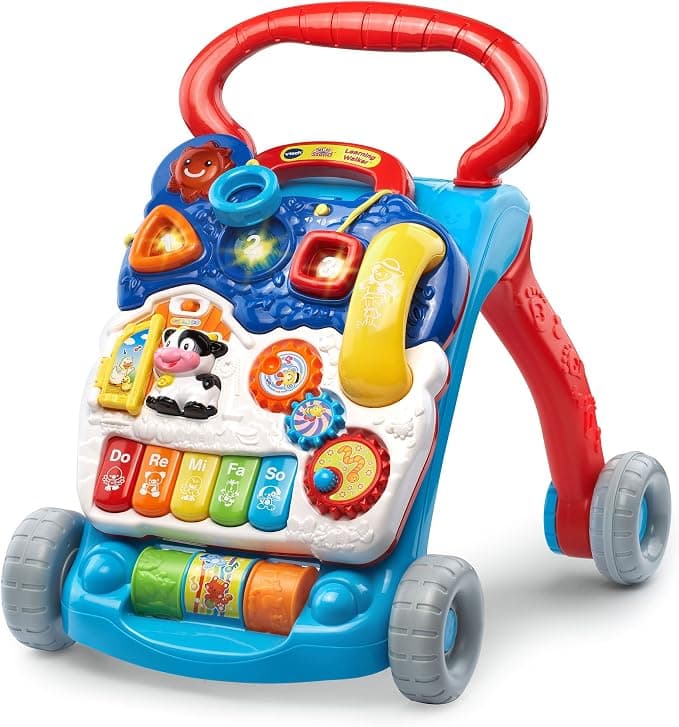
VTech Sit-to-Stand Learning Walker, Blue
$47.99 · verified Sep 12, 2026, 8:26 PM UTC
Best Baby Walkers for Learning to Walk: The 2026 Guide
Sit-to-stand and push walkers compared for real use, plus the safety basics worth knowing before you buy one.
By the USA Toy Deals Team · Updated August 2026 · 7 min read
Who it's forFor anyone shopping for a baby who's starting to pull up to stand, roughly 6 to 12 months.
Some links on this page are affiliate links. If you buy through one, we may earn a commission at no extra cost to you. We only recommend what we'd actually buy for our own kids. Full disclosure.
Quick answer: the VTech Sit-to-Stand Learning Walker is the best overall baby walker, working as a flat activity panel first and converting into a push walker once your baby is steadier on their feet. The Fisher-Price Panda Walker is the better pick for a baby who just started pulling up, thanks to its slower wheels. Both are covered in full below, along with a more compact third option.
Worth knowing upfront: every walker in this guide is a sit-to-stand or push-style walker, not the older wheeled seated walker that lets a baby's feet touch the floor and scoot around a room on their own. That older style has real, documented safety concerns around stairs and tip-overs, which is part of why pediatric guidance has moved away from recommending it. What's covered here is the modern alternative: either a flat activity panel a baby can use sitting down before converting to a push walker, or a walk-behind push walker with a built-in activity center, depending on the model.
All three picks are already in real use at scale (over 117,000 combined ratings across the three), so this list leans on that track record rather than guessing at what might work.
VTech Sit-to-Stand Learning Walker, Blue (opens Amazon in a new tab)
VTech Sit-to-Stand Learning Walker: starts flat as an activity panel, converts to a push walker when baby's ready.
$47.99· verified Sep 12, 2026, 8:26 PM UTCSee price (opens Amazon in a new tab)Fisher-Price 2-Sided Steady Speed Panda Walker (opens Amazon in a new tab)
Fisher-Price Panda Walker: slower Steady Speed wheels built for a baby who just started pulling up.
$37.99· verified Sep 12, 2026, 8:26 PM UTCSee price (opens Amazon in a new tab)Fisher-Price Laugh & Learn Smart Stages Puppy Walker (opens Amazon in a new tab)
Fisher-Price Puppy Walker: smaller footprint, same sit-and-play-then-push idea, for tighter spaces.
$32.99· verified Sep 12, 2026, 8:26 PM UTCSee price (opens Amazon in a new tab)Compare our picks
| Toy | Best for | Ages | Price | Bottom line | |
|---|---|---|---|---|---|
| ★ VTech Sit-to-Stand Learning Walker, Blue | Best Overall | 9 months - 3 years | $47.99verified Sep 12, 2026, 8:26 PM UTC | A two-stage walker that starts as a sit-and-play activity panel and converts into a push walker once a baby is ready to stand and take steps, with a two-speed control switch that lets parents slow the wheels down for a new walker. | See price (opens Amazon in a new tab) |
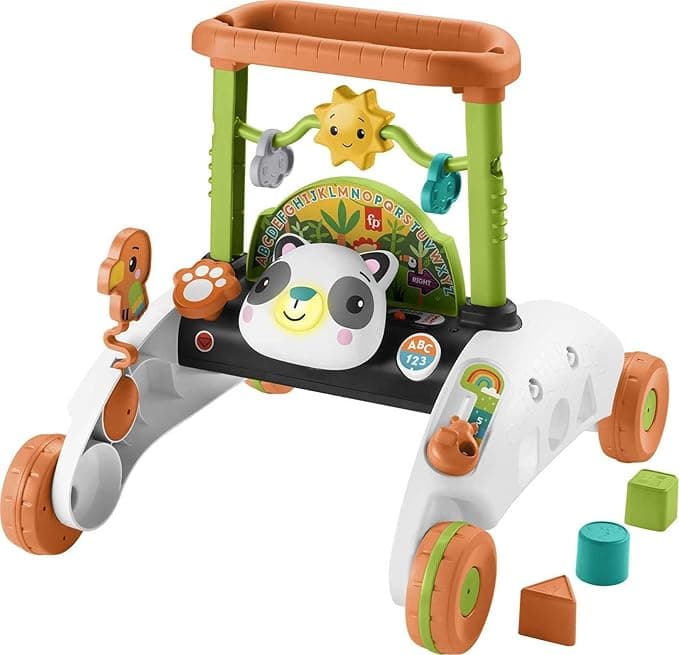 Fisher-Price 2-Sided Steady Speed Panda Walker Fisher-Price 2-Sided Steady Speed Panda Walker | Best for Beginner Walkers | 6 months - 3 years | $37.99verified Sep 12, 2026, 8:26 PM UTC | A panda-themed push walker with Steady Speed wheels designed to move slower than a typical walker, giving beginner walkers more control, plus a two-sided activity center a baby can approach from either side. | See price (opens Amazon in a new tab) |
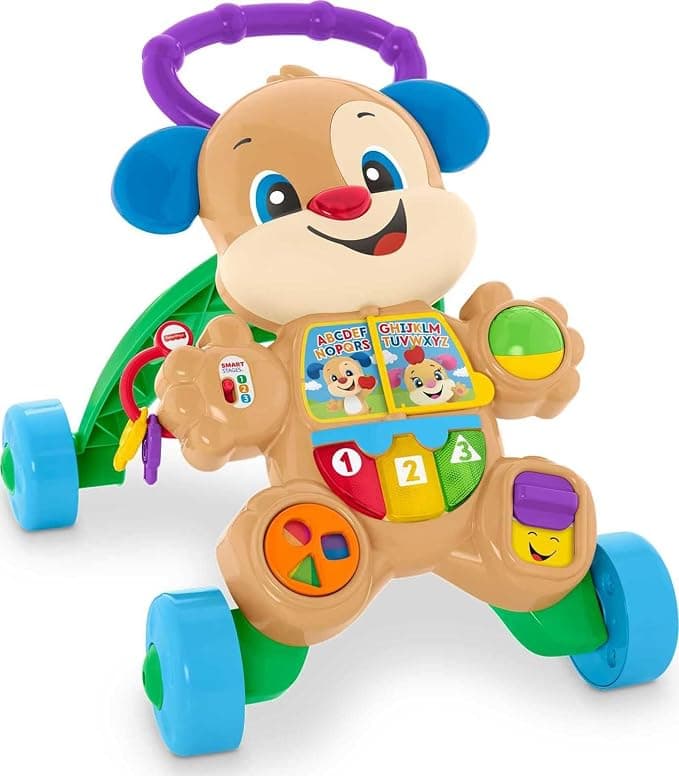 Fisher-Price Laugh & Learn Smart Stages Puppy Walker Fisher-Price Laugh & Learn Smart Stages Puppy Walker | Best Compact Pick | 6-36 months | $32.99verified Sep 12, 2026, 8:26 PM UTC | A compact puppy-themed walker that works two ways, sit and play for babies who aren't standing yet, then stand and push once they are, with three Smart Stages learning levels that grow with the child. | See price (opens Amazon in a new tab) |
In this guide
Walker Safety Basics
None of the three picks below are the seated, wheeled baby walkers that let a baby scoot across a room before they can actually walk. Those raised real safety concerns, mainly stair falls and tip-overs, which is why pediatric guidance has moved away from recommending them.
A sit-to-stand or push walker is a different category from the old seated style. The VTech below lays flat as a removable activity panel first and converts to a push walker once a baby is standing. The Fisher-Price Puppy Walker and Panda Walker work both sitting and standing without a separate flat mode: a baby plays seated in front of the assembled toy first, then stands and pushes it once they're ready. Either way, it's a toy that follows a baby's own walking progress instead of one that moves a baby around before they're ready.
Use on flat ground, away from stairs
Even a push-style walker needs a flat, open area away from stairs, steps, and clutter a baby could trip over once they're upright and moving. Keep a stair gate up regardless of which walker you use, and don't leave a baby unsupervised in one.
The Best Baby Walkers, Ranked
1. VTech Sit-to-Stand Learning Walker: Best Overall
This is a two-stage toy, not just a walker. Flat on the floor, it's a standalone activity panel with 5 piano keys, a play telephone handset, 3 shape sorters, and spinning rollers, so it's already useful before a baby can stand. Once they're pulling up, the same panel attaches to a wheeled base and becomes a push walker.
A two-speed control switch lets you slow the wheels down for a brand-new walker, then speed them back up as they get steadier. With over 98,000 ratings, it's the most reviewed walker of the three by a wide margin.
VTech Sit-to-Stand Learning Walker, Blue (Ages 9 months - 3 years) (opens Amazon in a new tab)
A flat activity panel that converts into a push walker, with a two-speed switch to slow the wheels for a brand-new walker.
2. Fisher-Price Panda Walker: Best for Beginner Walkers
The panda's wheels are built to move slower than a standard walker's, which gives a baby who just started pulling up more control instead of the walker rolling out from under them. It's a walk-behind design that works from either side, so two toddlers (or a toddler and a parent) can play at once.
Three Smart Stages learning levels cover 100+ songs, sounds, and phrases teaching the alphabet, counting, and opposites, and the sturdy frame doubles as something to pull up on before a baby is ready to push it.
Fisher-Price 2-Sided Steady Speed Panda Walker (Ages 6 months - 3 years) (opens Amazon in a new tab)
Steady Speed wheels move slower than a standard walker, giving a brand-new walker more control while they find their balance.
3. Fisher-Price Puppy Walker: Best Compact Pick
A similar two ways to play idea as the VTech, in a smaller, more compact puppy-shaped body that takes up less floor space. A baby plays seated on the floor with it first, before they're standing, then stands and pushes it once they are.
Three Smart Stages levels add 75+ songs, sounds, and phrases teaching letters, shapes, colors, and numbers, plus some early Spanish words. The easy-grasp handle and sturdy 4-wheel base are sized closer to a smaller baby than the VTech's wider frame.
Fisher-Price Laugh & Learn Smart Stages Puppy Walker (Ages 6-36 months) (opens Amazon in a new tab)
A smaller-footprint version of the sit-and-play-then-push idea, sized for tighter rooms and smaller babies.
Quick Comparison
| Walker | Best Age | What Sets It Apart |
|---|---|---|
| VTech Sit-to-Stand Learning Walker | 9 months - 3 years | Two-speed wheels, most reviewed of the three |
| Fisher-Price Panda Walker | 6 months - 3 years | Slower wheels built for brand-new walkers |
| Fisher-Price Puppy Walker | 6-36 months | Smaller footprint for tighter spaces |
What to Skip
Skip these
Skip any seated, wheeled walker that lets a baby's feet touch the floor and scoot around a room on their own, the older style that's fallen out of favor for real safety reasons. Also skip a walker whose wheels don't have any speed control if your baby is brand new to standing, a walker that rolls away too fast can do more discouraging than helping.
Bottom line
The VTech is the most practical starting point if you only want to buy one: it works flat before your baby can stand and converts once they can, with speed control to match. Go with the Panda Walker instead if your baby just started pulling up and you want slower, beginner-friendly wheels, or the Puppy Walker if floor space is tight.
Frequently asked questions
When should a baby start using a walker?
Most babies are ready for the push stage of a walker around 9-12 months, once they're already pulling themselves up to stand on their own. Age ranges vary by model: the Fisher-Price Panda Walker and Puppy Walker are rated from 6 months for seated play, while the VTech is rated from 9 months.
Are baby walkers safe?
The sit-to-stand and push walkers in this guide are a different, safer category from the older seated wheeled walkers that let a baby's feet touch the floor and scoot around a room before they can actually walk, which raised real concerns about stairs and tip-overs. Even a push walker should only be used on flat ground away from stairs, with a stair gate up and a baby supervised.
What's the difference between a sit-to-stand walker and a push walker?
The VTech is a two-stage toy: it lays flat as a removable activity panel first, then converts into a push walker once a baby is pulling up to stand. The Fisher-Price Puppy Walker and Panda Walker are walk-behind push walkers from the start, without a separate flat sitting mode, though a baby can still sit and play seated in front of them before they're standing.
Do walkers actually help a baby learn to walk?
They give a baby who's already pulling up something stable to hold onto while practicing steps, plus songs and activities that keep them engaged during that stage. They're not a substitute for floor time and independent practice, which is what actually builds the balance and leg strength behind real walking.