
Best Cooperative Card Games for Kids
A cooperative card game skips the sting of losing to a sibling: everyone wins or loses together. Here are 3 real picks built specifically around working as a team.
By the USA Toy Deals Team · Updated July 2026 · 6 min read
Who it's forFor a family or classroom that wants teamwork over head-to-head competition, especially with a sensitive younger player.
Some links on this page are affiliate links. If you buy through one, we may earn a commission at no extra cost to you. We only recommend what we'd actually buy for our own kids. Full disclosure.
Most family card games are competitive by design, someone wins, everyone else doesn't. A genuinely cooperative game flips that: the whole table wins or loses together, which changes the dynamic at the table entirely, especially for a younger kid who takes losing hard.
The 3 picks below are explicitly built as cooperative games, not games that happen to also work as a team activity.
All 3 scale to a real group, not just 2 players, making them a solid pick for a classroom, a birthday party, or a family with more than one kid at the table.
Compare our picks
| Toy | Best for | Ages | Price | Bottom line | |
|---|---|---|---|---|---|
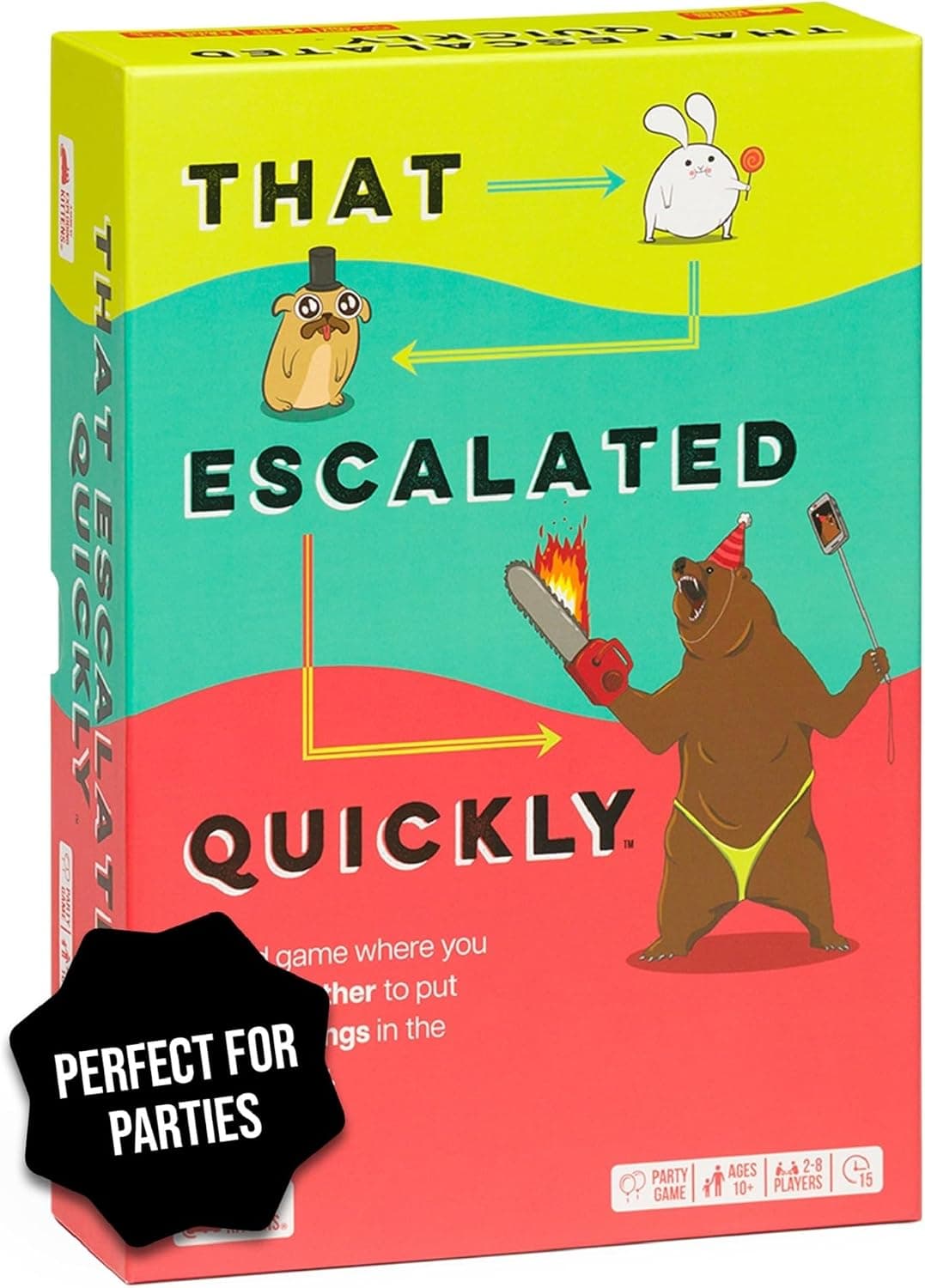
| ★ That Escalated Quickly | Best Overall | 10+ | $$ | That Escalated Quickly delivers on what it promises: a genuinely cooperative party game built around your group's own sense of humor rather than trivia or reflexes, and it holds up across an unusually wide age range for that reason. It asks for a proper read of the rules before the first round clicks, and its replay value depends on how creative your group is willing to get, players phoning in simple answers will find it flatter than reviewers who lean into the absurdity. For families who specifically want a card game where nobody loses to anybody else at the table, it's one of the stronger cooperative options in the Exploding Kittens catalog. | See price (opens Amazon in a new tab) |
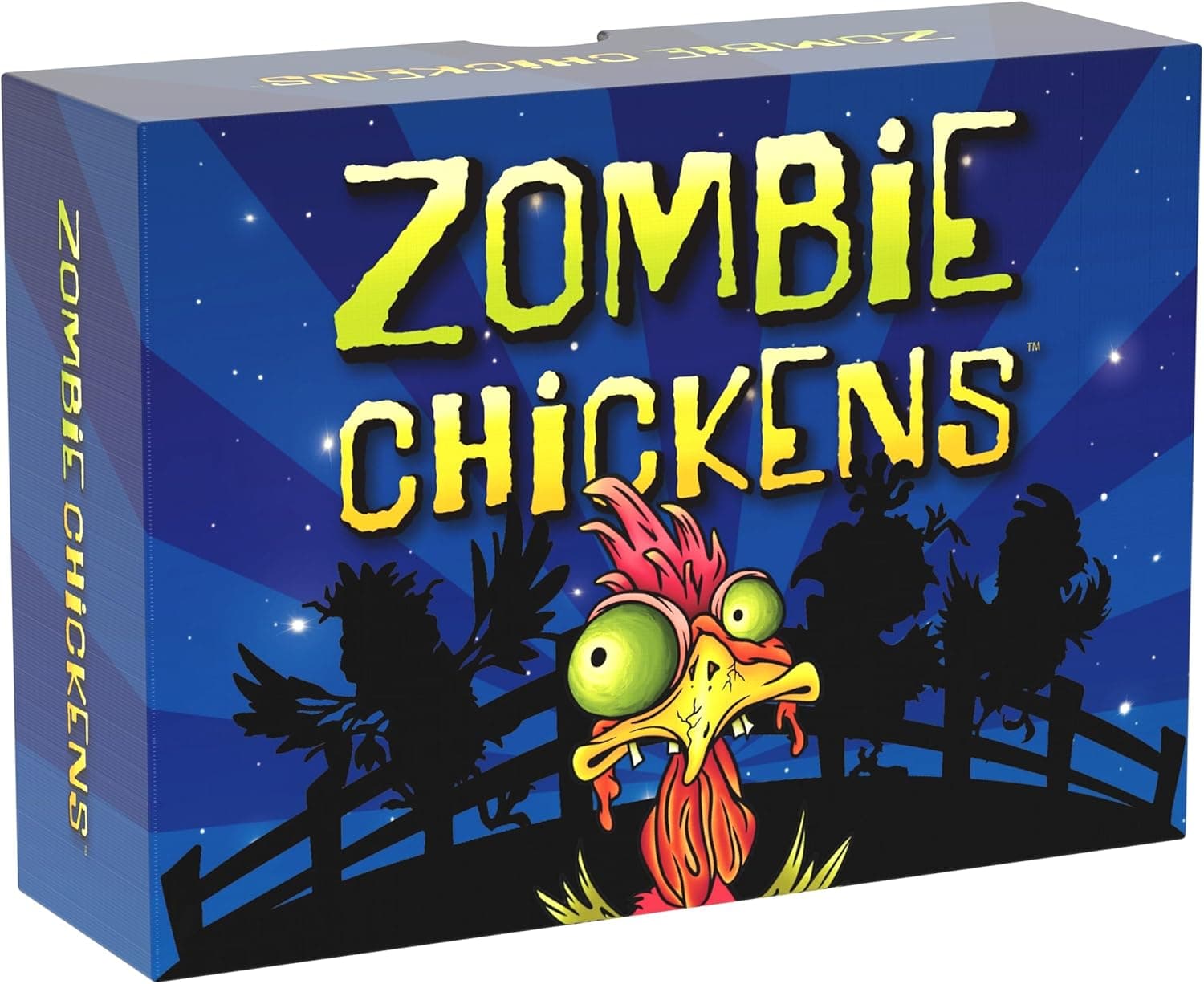 Zombie Chickens Zombie Chickens | Best Flexible Format | 8+ | $ | Zombie Chickens is a smaller, less-documented game than the flagship card games in this catalog, but the core promise checks out in real reviews: it genuinely supports competitive, cooperative, and solo play, and families do rotate between all three. The tradeoff is a real learning curve up front, the keyword-based attack and defense system takes a session or two to click, and competitive rounds can be short. For a household that wants one box that flexes between game night formats and doesn't mind a bit of setup the first time through, it delivers on what it promises. | See price (opens Amazon in a new tab) |
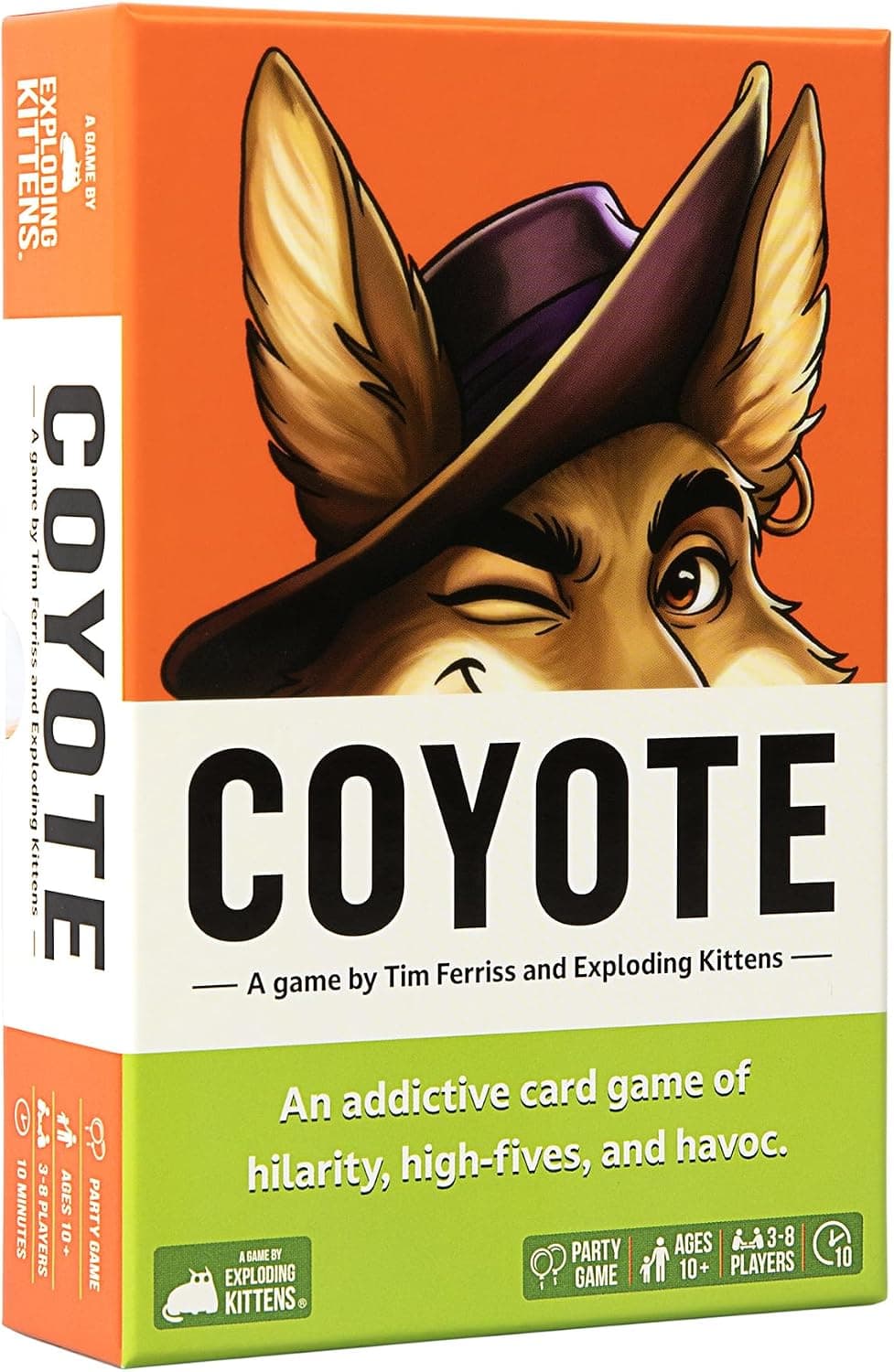 Exploding Kittens Coyote Exploding Kittens Coyote | Best for Quick Rounds | 10+ | $$ | Coyote earns its 4.6-star average honestly: it is quick to learn, genuinely funny in practice, and the cooperative mode gives it more range than a typical party card game, see our [best cooperative card games for kids](/guides/best-cooperative-card-games-for-kids) guide for how it compares to similar picks. The one recurring complaint, one-directional card text that puts some players at a disadvantage around the table, is a real design nitpick rather than a dealbreaker. It is not a deep strategy game and it needs at least three players, so judge it against what it actually is: a fast, loud, easy-to-teach group game built for laughs rather than long-term replay depth. | See price (opens Amazon in a new tab) |
What Makes a Card Game Genuinely Cooperative
A real cooperative game shares a win or loss condition across the whole table, not just a shared theme.
What to check before buying a cooperative card game
- A shared win or loss condition: the whole group succeeds or fails together, not one player winning at others' expense.
- Flexible modes are a bonus: some cooperative games also support a competitive mode for a different night.
- Communication rules: some cooperative games restrict what players can say to each other, which adds real challenge.
- Age range matched to complexity: cooperative games can still involve real strategy, check the stated age range carefully.
3 Real Cooperative Card Games
Best Overall
A genuinely cooperative game where players work together to put absurd things in the correct order. Explicitly marketed as cooperative, not just family-friendly.
That Escalated Quickly (Ages 10+) (opens Amazon in a new tab)
Explicitly cooperative game, players work together to order absurd items correctly.
Best Flexible Format
A survival-themed card game that explicitly supports 3 ways to play: competitive, cooperative, or solo. Good for a group that wants to switch modes depending on the night.
Zombie Chickens (Ages 8+) (opens Amazon in a new tab)
Survival-themed game supporting competitive, cooperative, and solo play modes.
Best for Quick Rounds
A fast, 10-minute sequence-building game with both cooperative and competitive modes built in. Quick enough to fit multiple rounds in one sitting.
Exploding Kittens Coyote (Ages 10+) (opens Amazon in a new tab)
Fast 10-minute sequence-building game with both cooperative and competitive modes.
Side-by-Side Comparison
| Game | Mode | Round Length | Best For |
|---|---|---|---|
| That Escalated Quickly | Cooperative only | 15 minutes | Pure teamwork |
| Zombie Chickens | Competitive, cooperative, or solo | Varies | Flexible group nights |
| Coyote | Cooperative or competitive | 10 minutes | Quick, repeatable rounds |
Frequently Asked Questions
Frequently asked questions
What's the difference between a cooperative and a competitive card game?
In a cooperative game, the whole table wins or loses together, working toward a shared goal. In a competitive game, players work against each other and only one person (or team) wins.
Are cooperative card games good for a younger kid who hates losing?
Often, yes. Since the group wins or loses together, a younger player isn't singled out for losing individually, which can make the game feel less personally stressful.
Can cooperative card games still be challenging?
Yes, several genuinely cooperative games involve real strategy and communication rules, they're not simplified just because they're not competitive.
Do any of these games also work competitively?
Zombie Chickens and Coyote both support switching between cooperative and competitive modes, so a group can choose depending on the night.